
The Light That’s Killing Us
Glen Jeffrey’s Chilling Warning on Huberman’s Podcast

There’s a reason why vampires live forever and it’s not because they avoid the light, despite what Hollywood says. Keep reading if you want an insider view on how to live longer (maybe forever? If that’s your thing.)
Speaking about forever, when we think about longevity and wellness we tend to talk about food, supplements, and exercise. We almost never talk about light, even though every cell in your body reads it as information. That blind spot is exactly why Andrew Huberman’s recent conversation with Dr. Glen Jeffrey landed so hard.
Jeffrey is not a contrarian. He is a veteran retinal physiologist who has spent decades studying how aging cells lose their ability to make energy. He’s measured mitochondrial decline in the retina with the kind of care usually reserved for particle physics. So when he says something that sounds outrageous, it deserves attention.
During the episode, he dropped a line that has already ricocheted across the scientific world:
“Some in the field are saying LED lighting in buildings is worse than asbestos.”
Hyperbole? No. In this post I am going to tell you why I think we all should be deeply concerned, and I am going to show you how to save yourselves while you still can!
But first, remember to subscribe. Our subscribers are the reasons why we can write these great articles. We are thankful for you!
He wasn’t talking about microplastics or PFAS. He was talking about the LED lights in your ceilings at home, at school, and at work. And he backed it with mechanistic biology that is difficult to dismiss once you understand it.
To appreciate what he’s warning us about, you have to start with the retina, where mitochondria burn fuel faster than almost any tissue in the body and then walk outward to the rest of human physiology.
A Mitochondrial World We Accidentally Broke
Jeffrey’s lab can watch mitochondria decline under LED light in real time. Not metaphorically. Literally. Under the wavelength profile typical of modern indoor LEDs, mitochondrial membrane potentials drop, respiration slows, and ATP synthesis falters.

You don’t need a medical degree to see where that story goes. Weak mitochondria don’t stay in the retina. They drag down the entire system: metabolism, circadian alignment, cognition, and disease vulnerability.
And yes, they measured the systemic fallout. Mice kept under LEDs, the kind you’d find in most classrooms or office buildings, began gaining fat, developing fatty liver, losing metabolic control, and behaving like animals with low-grade chronic inflammation.
This isn’t brightness. It isn’t screen time. It’s the spectral composition of the light.
Many patients I see say “My partner would go bananas if I tried to swap out all the lights” I say, “Tell them you want to save their beauty or their testosterone or even there lives” And if you share this post with them now, they will finally understand.
The Turning Point: We Removed Half the Spectrum
Until about 2005, humans lived under sunlight and incandescents. Both share one indispensable feature: a smooth, continuous spectrum extending deep into the red and infrared.
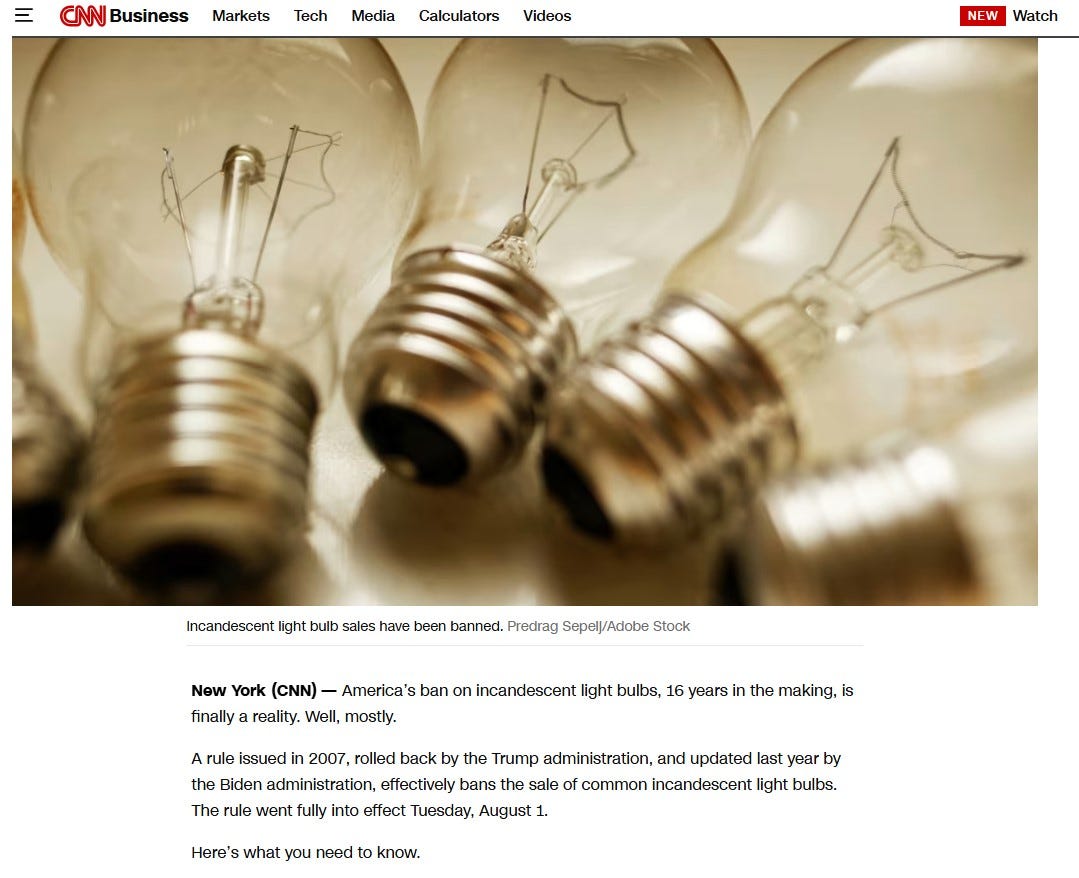
LEDs are different. They are designed for efficiency, not biology. Their spectrum has a hard spike in short wavelengths (blue-violet) and almost nothing in the long wavelengths that bathe our mitochondria under natural light.
We didn’t just change bulbs.
We amputated half of the spectrum we evolved under.
Jeffrey’s central argument isn’t that blue light is toxic. It’s that blue light without red light is a biological mismatch. Sunlight brings both. Fire brings both. Incandescent brings both. LEDs do not.
The Water Inside Mitochondria Is the Real Player
Here’s where Jeffrey’s work becomes genuinely elegant.
Decades ago, researchers assumed mitochondria absorbed red light directly. Jeffrey tried to prove it with spectrometry and couldn’t. The absorption profile didn’t match the mitochondria. It matched something else entirely:
Water.
Specifically, the structured nanoscopic water inside the mitochondrial matrix.
This challenges my own understanding as in my fellowship I was taught that light was absorbed in CCO.

Long-wavelength light alters the viscosity of that water. Now imagine ATP synthase, the spinning turbine that produces all your ATP—trying to rotate in thicker or thinner fluid. Change the viscosity and you change the speed of the turbine.
Expose mitochondria to the right wavelengths in the red/near-infrared range and two things happen:
ATP production increases almost immediately
The cell begins building more of the electron transport chain itself “laying more track,” as Jeffrey put it
This isn’t mystical “energy healing.” It’s physics driving biochemistry.
A Small Flashlight on the Back Alters Blood Sugar
One of the most striking findings in the conversation was almost comically simple.
Jeffrey’s team shined a small rectangle of long-wavelength light on a person’s upper back, several inches in size, not on the abdomen, not near the pancreas, and then ran a standard glucose tolerance test.
The blood sugar spike dropped by more than 20 percent.
A local beam of light creating a whole-body metabolic shift tells you something fundamental: mitochondria behave as a networked community, not isolated organelles trapped inside individual cells.
This matches what we now know from other domains: mitochondria release signals, microvesicles, peptides, even whole organelles that communicate across tissues. Light simply pushes that network in a favorable direction.
What this tells me is simple, our body receives light signals and our mitochondria respond. And if Mama mitochondria is happy, we are all happy!
Five Days of Better Vision From Three Minutes of Red Light
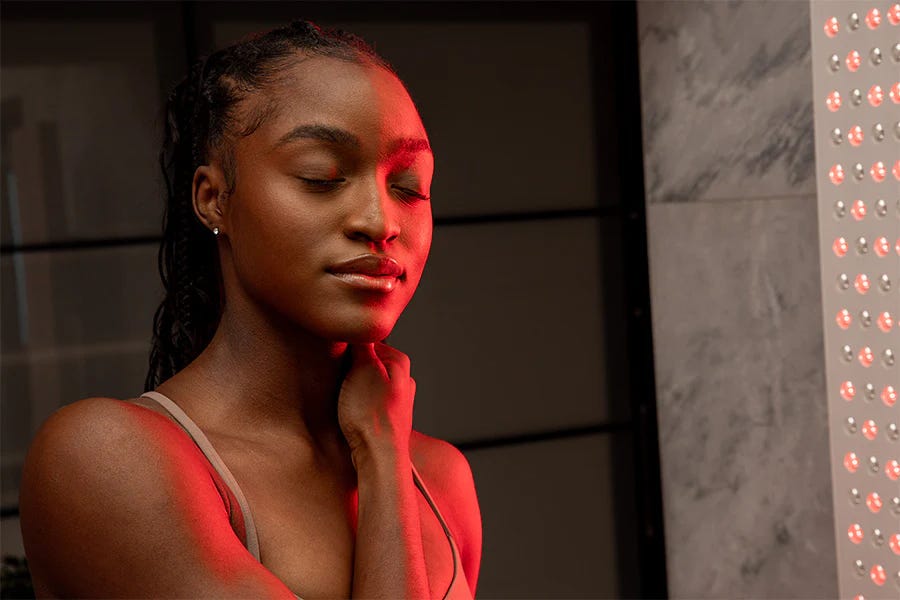
When Jeffrey applied three minutes of 670 nm light to the eyes (eyelids open or closed, it didn’t matter), color contrast sensitivity improved dramatically and stayed that way for five days.
Younger adults saw modest improvement. Adults over 40 saw the biggest jump. This, again, aligns perfectly with mitochondrial aging.
They tried the same thing in retinal degeneration patients. The lesson was sobering but invaluable: the earlier in the disease process, the better the response. Once the tissue is structurally too damaged, mitochondria can’t be revived by light alone.
Still, in age-related decline, the effect is real and reproducible.
Light Goes Through the Body—Literally
People assume red light affects only surface tissue. Jeffrey demonstrated that long-wavelength light passes through skin, muscle, and even bone.
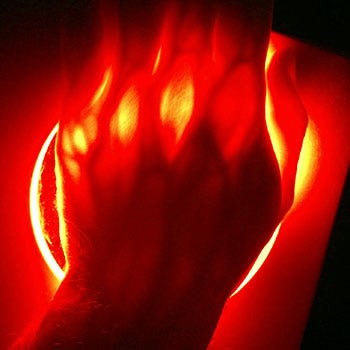
Shine it on one side of the head and it emerges out the other.
Even clothing hardly blocks it. The wavelengths simply scatter differently.
Which means you don’t need to strip down, and you don’t need to hit a precise anatomical target. Biology does the routing for you.
The Built Environment Is Working Against Us
This is the part of the conversation where Glen becomes visibly frustrated. Me too Glen, me too.
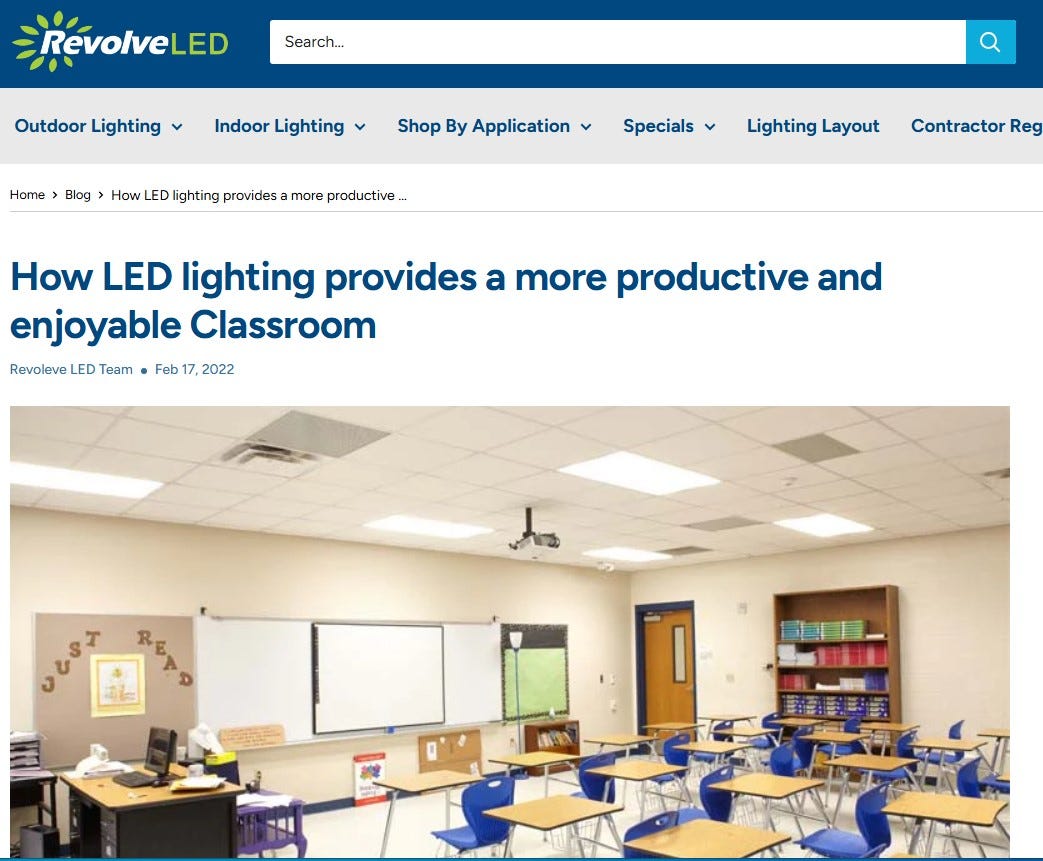
We designed buildings to save energy, not protect physiology. So now we have:
LEDs everywhere
Infrared-blocking architectural glass
Children and adults spending almost all day indoors
The result is a lighting environment that no human, and certainly no mitochondrion, evolved to tolerate.
Dr. Jeffrey is careful, but he isn’t naïve. He notes that European life expectancy curves showed a flattening around 2010 (pre-COVID). He does not claim causation. But he does insist lighting belongs in the conversation.
What Actually Helps (And Costs Almost Nothing)
Dr. Jeffrey’s guidance is refreshingly modest and similar to mine:
Get outside daily, especially in the morning
Even cloud cover doesn’t block long-wavelength light completely.Use halogen or incandescent bulbs where you live and work
Their spectrum is smooth and sun-like. LEDs are spiky and incomplete.
In one study, simply placing 40-watt incandescent desk lamps in a windowless LED-lit department improved visual function, and the improvement persisted a month after the bulbs were removed.
Avoid lasers
They scatter dangerously and create hotspots. For home use, LEDs or incandescents delivering red/NIR light are far safer.If you use red light, use it in the morning! Mitochondria respond far more robustly earlier in the day. Afternoon effects are blunted.
Why This Matters for Longevity
Dr. Jeffrey’s research lands squarely inside the modern framework of aging biology:
mitochondrial dysfunction
impaired proteostasis
chronic inflammation
metabolic dysregulation
stem cell exhaustion
circadian breakdown
Light intersects with each of these mechanisms.
And unlike most longevity interventions, the barrier to entry is trivial: stand outside in the morning, replace a bulb, or use a modest red-light source with predictable wavelengths.
We talk endlessly about molecules. But here is a non-molecular intervention that directly improves the performance of the organelle responsible for producing your body weight in ATP every day.
Where This Series Goes Next
The next post—the exclusive sybscriber one—will go deeper into bioenergetics, mitochondrial signaling, the water-structure hypothesis, and the connection between long-wavelength light and the hallmarks of aging.
I will also outline how clinicians are beginning to use this research: for metabolism, neurodegeneration, retinal aging, recovery, and immunologic resilience.
For now, you can capture 90 percent of the benefit with a morning walk and a cheap halogen bulb.
Sometimes the frontier of longevity isn’t futuristic.
Sometimes it’s daylight.
To A Life Well Lived,
-Dr. M
Thank you for this piece. I’ll be listening to the Huberman episode now.
I have a near infra-red sauna I spend 20 minutes in a couple times per week, followed by a cold shower. I always feel great afterward. After reading this I’ll be increasing that to 3 to 4 times per week (and in the morning) and also share this with my spouse and suggest we revert back to incandescent bulbs.
‘During the episode, he dropped a line that has already ricocheted across the scientific world:
“Some in the field are saying LED lighting in buildings is worse than asbestos.”
Hyperbole? No. ‘
Hyperbole, yes.
If his line has ricocheted across the scientific world, it’s a very quiet ricochet. I find no mention of it in searches. Can you reference other accredited researchers or medical professionals who have remarked on the accuracy and profundity of the statement?
Regardless, the comparison is a poor one, IMO.
Asbestos in a building can range from a critical public and individual health risk to a pretty minimal one, depending on the product which contains it, its current status (ie. is the product degraded, is the building undergoing a renovation or deconstruction, etc), and an individual’s specific circumstances affecting exposure (ie. infrequent visitor vs someone who works every day in the building, or is working on a renovation.)
(I am not, to be clear, an asbestos apologist; I’ve long been embarrassed that Canada saw fit to ban asbestos here but happily continued to mine and ship it to buyers in countries who haven’t yet banned it. It’s shameful; we’ve known the terrible risks asbestos presents for decades. )
The worst effects you assert here for LED lights don’t begin to approach the public and individual health damage done by asbestos.
Unfortunately this is not the only example of hyperbole in this article.
I have an appreciation, though only a layman, for the positive impact of longer wavelength light in photobiomodulation, as well as the increasing interest in research around specific effects on mitochondrial activity.
With no links to peer reviewed studies, papers and articles published in reputable journals, you’ve left your readers with no way to attempt to validate the statements you make here, nor to further educate themselves.
For example, this article in Frontiers in Science (a policy and practice review, not a published paper). It’s long, and focuses on neurology and IR/NIR applications on the brain, but has extensive references to peer reviewed papers. https://www.frontiersin.org/journals/neurology/articles/10.3389/fneur.2024.1398894/full
The authors clearly demonstrate that long wavelength light will not pass completely through the head. Detectors placed in the brain of cadavers to measure penetration of NIR lasers and LEDs show minimal penetration beyond a couple of cm max (depending on power of the light source). NIR and IR incident from an incandescent bulb are not going to be detectable on the other side of a skull. If you assert differently, or Jeffrey does, a link to his peer-reviewed study that demonstrates this would help your readers.
“The blood sugar spike dropped by more than 20 percent.” Your readers would again be well served by a link to his study, and presumably his paper on this. Such a finding, reviewed and replicated, would definitely ricochet across the scientific world.
“A local beam of light creating a whole-body metabolic shift tells you something fundamental: mitochondria behave as a networked community, not isolated organelles trapped inside individual cells.”
There’s no doubt that mitochondria are not completely isolated; they generate chemical and electrical signals which can affect other cells and cell components. But perhaps any effect of this light experiment, assuming it’s been peer-reviewed and replicated, might be due to the free-floating (non cell-bound) mitochondria in blood, muscle and other tissues, as referenced in the article I’ve linked? I’ve nowhere near enough knowledge or expertise to opine on this, but I question leaping to your conclusion that mitochondria are in some sort of mycorrhizal-like network.
Far too long a comment, sorry. In sum: extraordinary claims require extraordinary evidence. A bit of that evidence would be much appreciated.