
The FDA Aftermath
Lack of Government Transparency Harms Us All

Ok, I am not a political physician. In fact, in medical school they told us, Religion and Politics, leave them out of the exam room if you want to have good healing. This came from my medical school which at the time was owned by the Catholic Diocese. Now, it is part of Touro a Jewish Faith based University system.
so…….there’s that.
Today I am going to breakdown a deep concern I have with the media, our government and what these same entities looked to do to the peptide experts with the PCAC. I will also state what that means for peptides and why what appeared to be spontaneous outrage was really a Big Pharma industry-funded show. Including the bashing by all the news outlets and academia……
If this type of Insider view of Skulduggery interests you, keep reading.
But first, please remember…..The Longevity Insider couldn’t bring you this cutting edge reporting without your support. Subscribe Now, learn the future today.
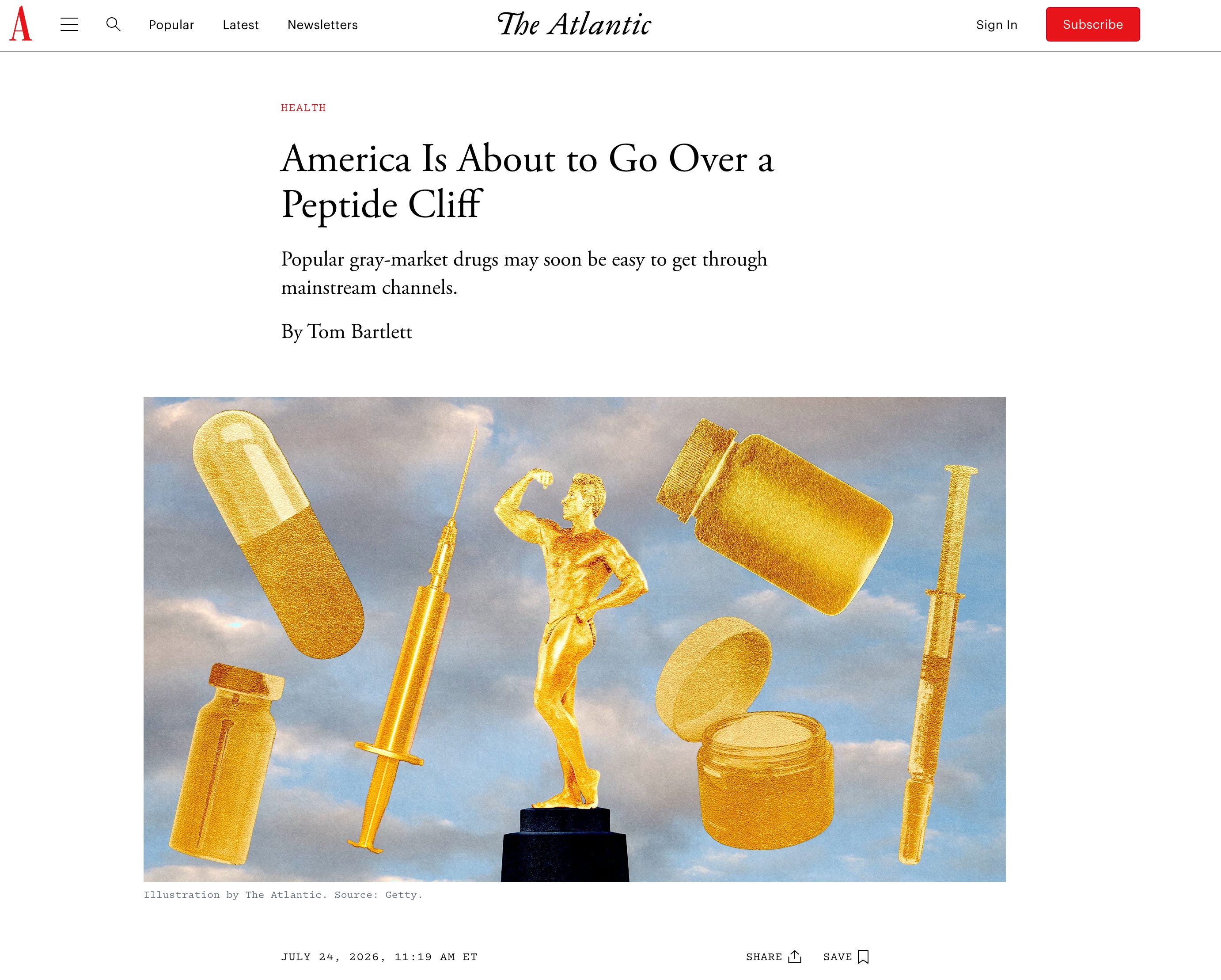
If you read the mainstream media it is as if peptides are a spawn of Satan and Dr Hal of Gameday is a Telemedicine profiteer slinging them around America. Neither of which are true, which is why I tend to not follow media “reporting”
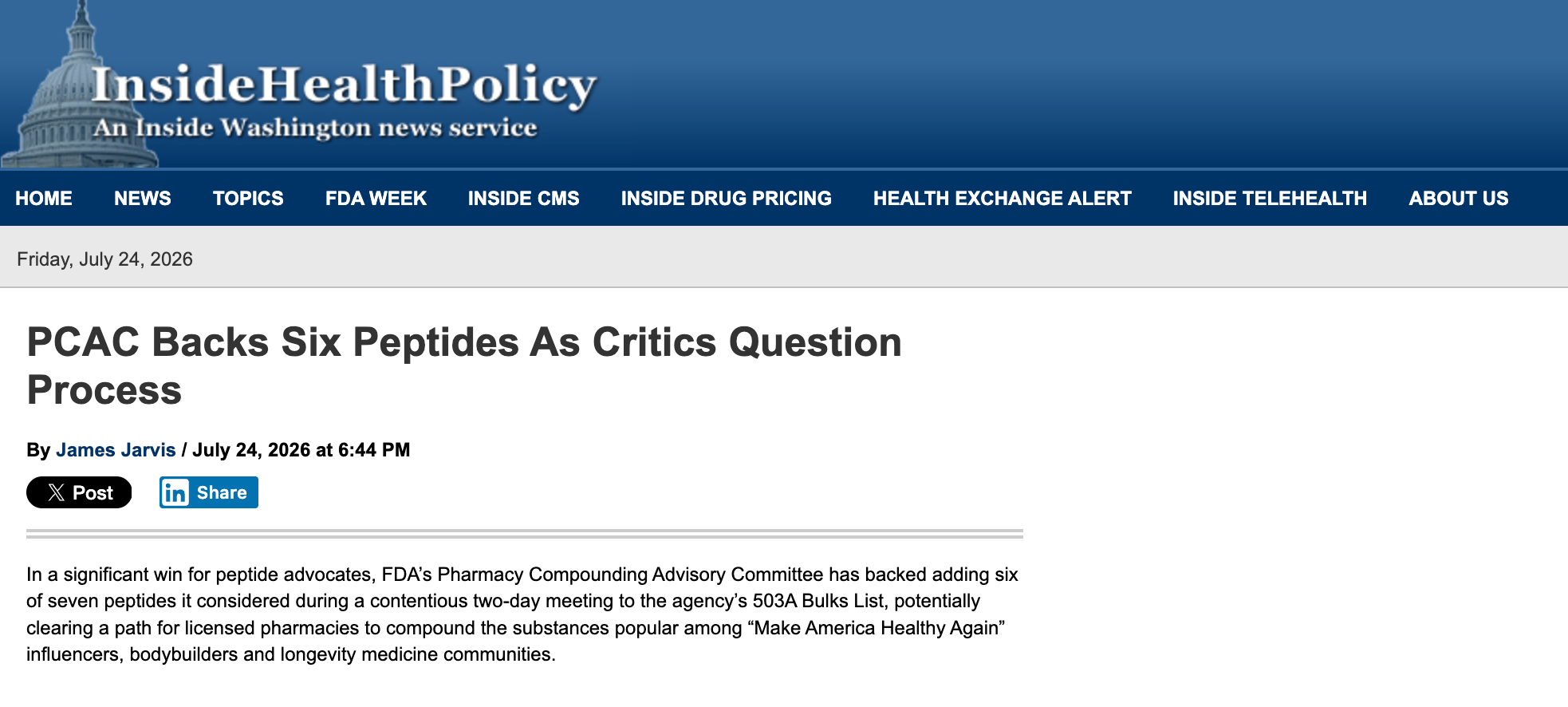
And the NY Times
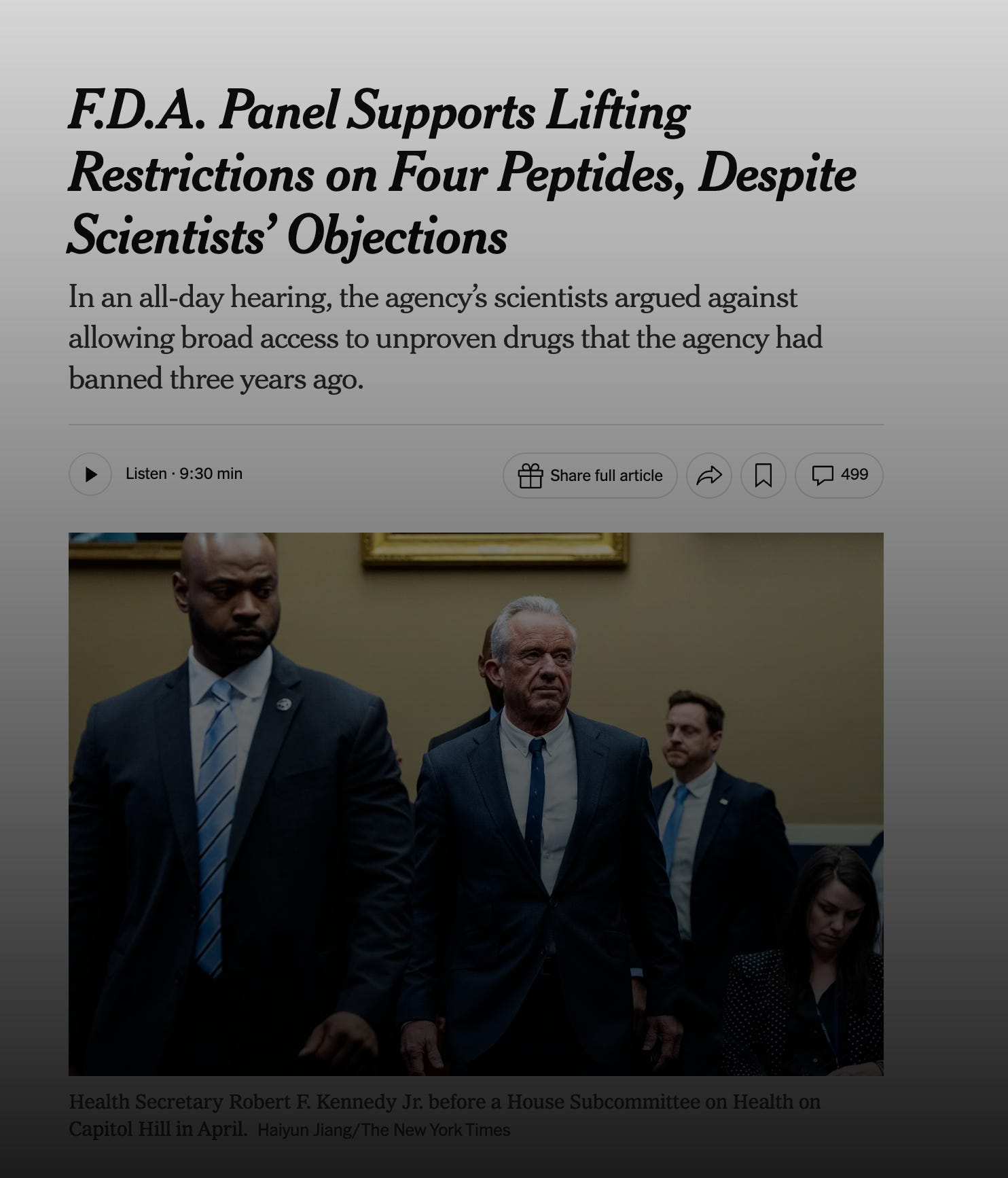
“FDA Scientists vs Peptide Grifters and RFK Jr.” was the narrative. Nothing could be further from the truth.
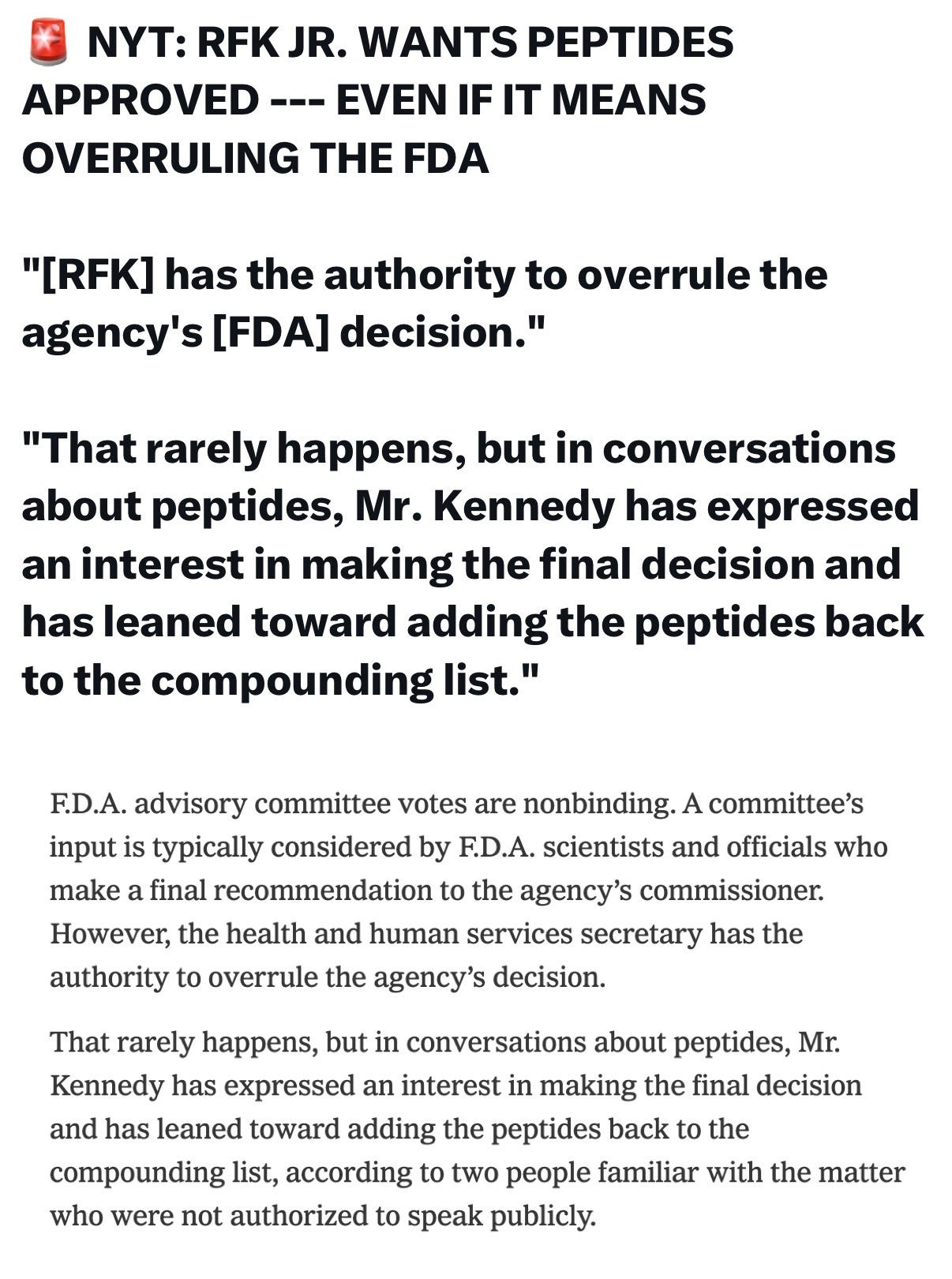
The News Narrative from the PCAC is this: Some pirate, profiteer grifter physicians and compound pharmacies were steamrolling the FDA…
As it turns out the story is much deeper than that. Which is why I want you to listen to this first. Please, before you read any further, just take a listen.
The majority of standing members who are physicians as a general rule felt the same way Dr Haleem Mohammed did. How do I know? I spoke with them extensively.
Prior to the meeting and after the meeting. We all worked very hard on this effort. I too wrote manuscripts…. So, as someone with a personal relationship to these members, I am biased, but I am also able to attest to their intentions and deep expertise in using peptides for patients. Something many of the other PCAC members have never done.
The PCAC panel for this meeting consisted of many different temperaments, talents, and convictions.
The primary roles and voting members of the PCAC are structured as follows:
Core Voting Members
Elizabeth Rebello, MD, FACHE, FASA, CPPS, CMQ Professor of Anesthesiology, UT MD Anderson Cancer Center, Rising Tide Grant recipient
Timothy D. Fensky, RPh, DPh, FACA Representative for the National Association of Boards of Pharmacy (NABP)
Brian Serumaga, PhD Acting Chairperson; Representative for the United States Pharmacopeia (USP)
Gabriel Alizaidy, MD, MS Scientific Director, Maximus Health
Asare B. Christian, MD, MPH Founder, Aether Medicine
Senator Bobby Harshbarger, PharmD, FACA Pharmacist & Tennessee State Senator
Melissa Loseke, DO Chief Medical Officer, Re-new Institute
David D. Pope, PharmD Chief Pharmacy Officer, Xifin Pharmacy Solutions
Joshua Starbuck, MD Chief Medical Officer, Makena Health
Kris H. Wusterhausen, DO Medical Director, The Resurge Clinic
Haleem Mohammad, MD, MBA Chief Medical Office, Gameday Men’s Health
Non-Voting, Temporary & Advisory Roles
Donnette D. Staas, PhD Industry Representative (VP, Regulatory Strategy at Jazz Pharmaceuticals) Non-Voting
Todd Durham, PhD Consumer/Patient Representative (Senior VP, Foundation Fighting Blindness) Temporary Voting
Takyiah Stevenson, PharmD Designated Federal Officer (DFO), FDA Center for Drug Evaluation and Research
Josh Mailman, MBA Technology Entrepreneur, Rare Cancer Patient
Brian Lee, MD, MAS, Temporary Voting, Consultant for Novo Nordisk
Friedhelm Sandbrink, MD, Temporary Voting, Neurologist
Maral Kibarian Skelsey, MD, Dermatology Temporary Voting
Kevin Zacharoff, MD, Temporary Voting, SGE since 2021
William C. Zamboni, PharmD, PhD, Temporary Voting, Consultant for Pharma Pharma AND FDA Funded Researcher. >100 Million
Costantino Iadecola, MD, Temporary Voting, Neurologist
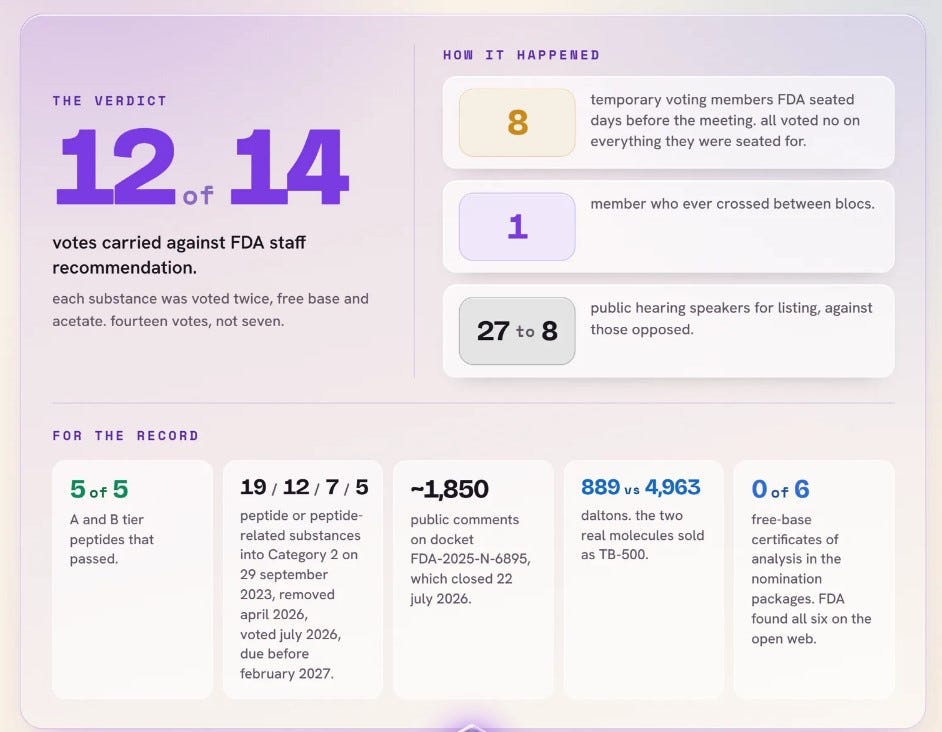
It is very important to understand what went down prior to the meeting. Many of us pointed out that the FDA stacked the box with additional representatives who had ties to larger pharmaceutical companies who had their own versions of peptides in the hopper.
Why This Peptide Docket Looks Like Regulatory Science

There are moments when an entire field quietly crosses a threshold.
Some of us are also now pointing out the detailed FDA briefing delivered by the AAPM, which turns out was NEVER incorporated into the FDA materials for PCAC members.
Personally, I have no clue why. In this update there was legion of data reflecting safe use of all the Peptides being voted in…..AND, appropriate characterization of nearly all peptides. Further, the AAPM has proposed a regulatory white paper outlinign the way forward on these peptides.
Seems like a reasonable approach that could be investigated by the FDA.
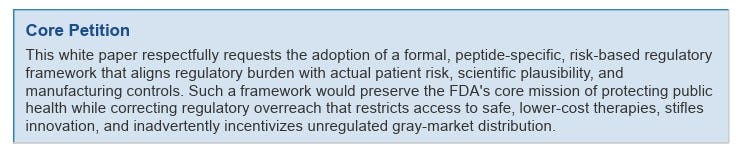
So why would the FDA exclude this data? Good question, I think I may have some answers soon.
So, back to the ballot box stuffing….These temporary members consistently voted no. The permanent members split votes. So as someone who is always suspicious of government and politics I needs to take a deep look at what may have went down at the meeting prior to the meeting.
Both from the FDA industry side and from the Physician and Pharmacist end.
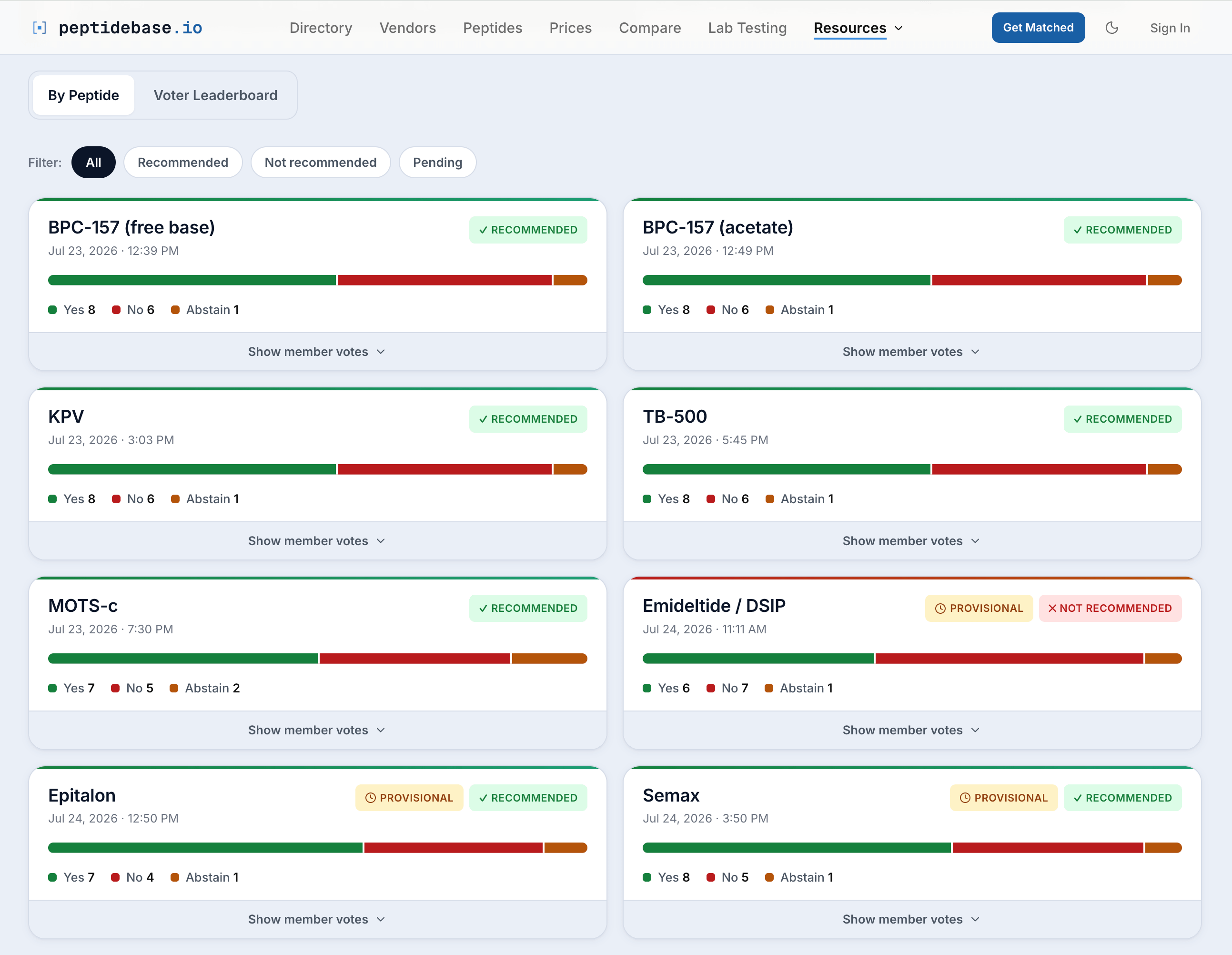
What I find interesting is how the temporary members voted here.
Non-voting industry representative
Donnette Staas, PhD, Vice President for Regulatory Strategy at Jazz Pharmaceuticals, was explicitly designated the non-voting industry representative. Her pharmaceutical affiliation was transparent and structurally anticipated. She could participate in discussion but did not vote.
Ironically, this may be more transparent than several voting members. Her industry role is openly labeled, while potentially affected clinic owners, pharmacy professionals and institutional drug-development researchers were classified as scientific, professional, consumer and/or temporary voting members.
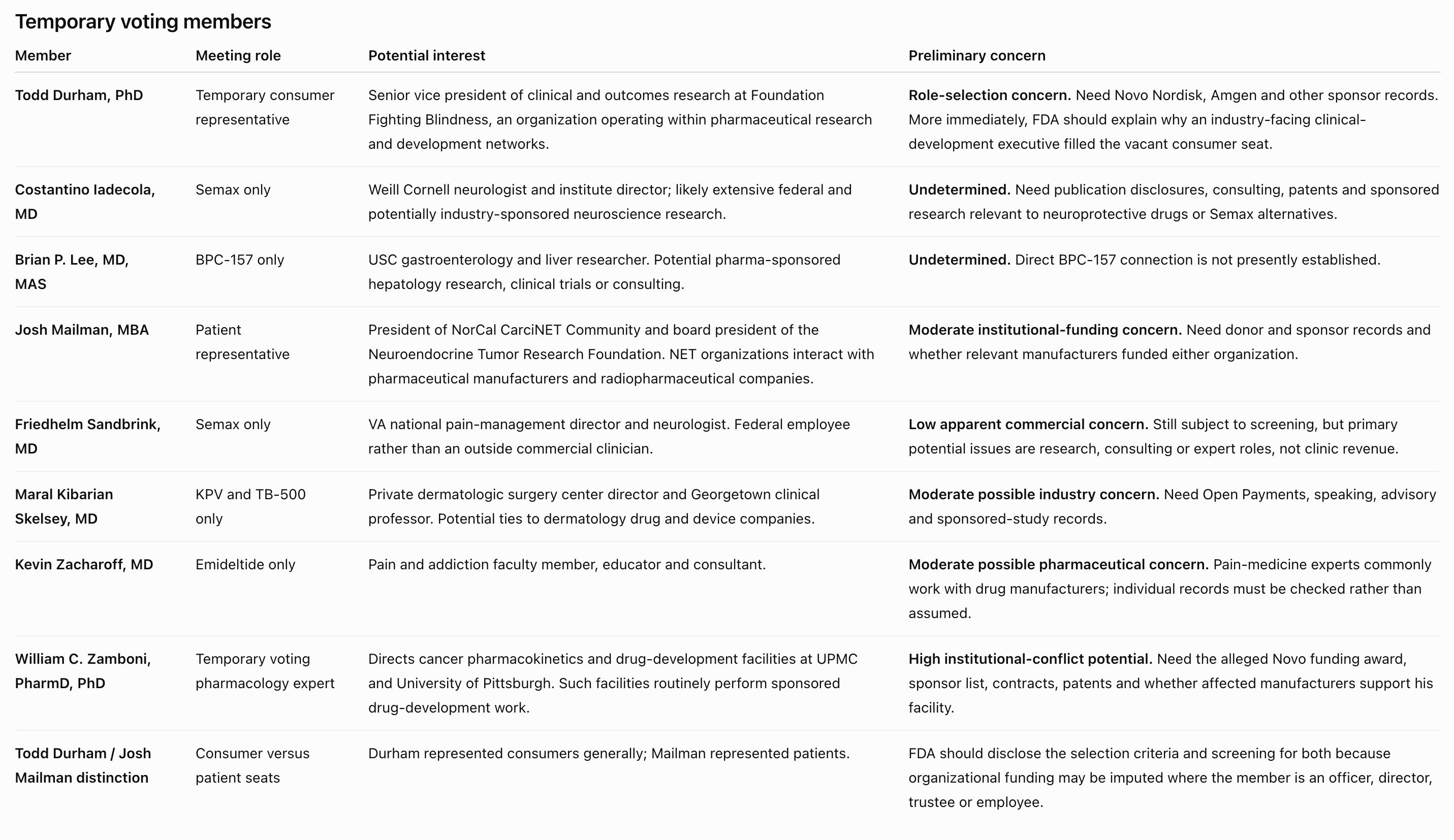
These were my first thoughts when I reviewed their names. Well, I decided to dig deep and find out more here…..One thing I find interesting in the government efforts is the use of fancy names to obscure what people actually do. This allows media to place sheepskin on wolves……
What legally counts as a conflict
Under 18 U.S.C. §208, an SGE generally cannot participate in a particular government matter that would have a direct and predictable effect on:
the SGE’s own financial interests;
a spouse’s or minor child’s interests;
a business partner’s interests;
an organization where the SGE is an officer, director, trustee, general partner or employee;
or an entity with which the SGE is negotiating employment.
FDA expressly states that an employer’s relevant financial interest can be imputed to the committee member even when the member has no ownership and had no personal involvement in the underlying transaction.
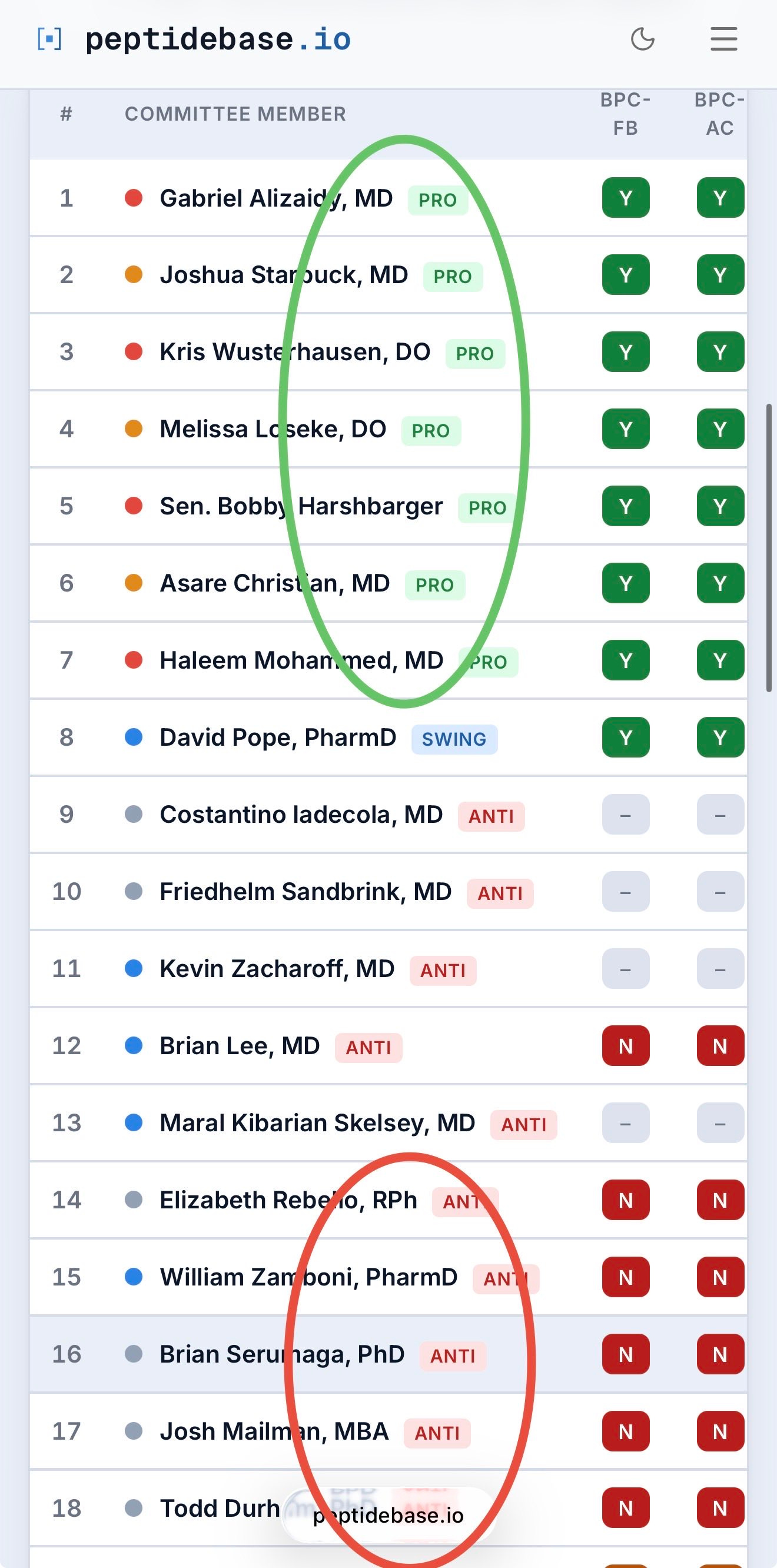
From PeptideBase.io you can see who voted how……
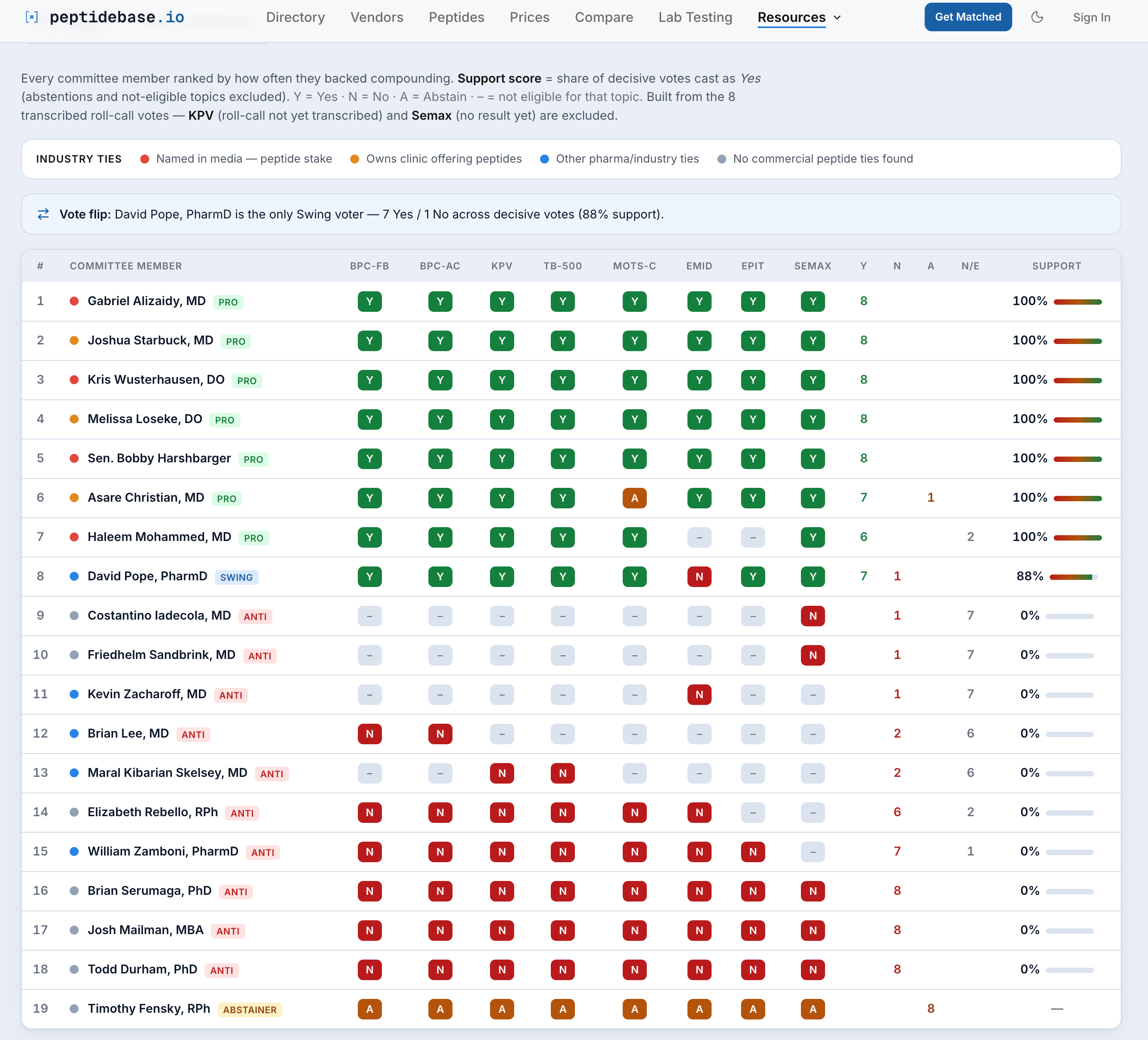
Did a single Temporary Member vote yes? Nope….
The FDAs “Consumer Representative”
One vote on the Pharmacy Compounding Advisory Committee really stood out to me. It was not because of how the vote was cast. It was because of who cast it.
Todd Durham, PhD, who was the FDAs Consumer Representative during the July 2026 Pharmacy Compounding Advisory Committee meeting. He has been a governmental SGE since 2021…….
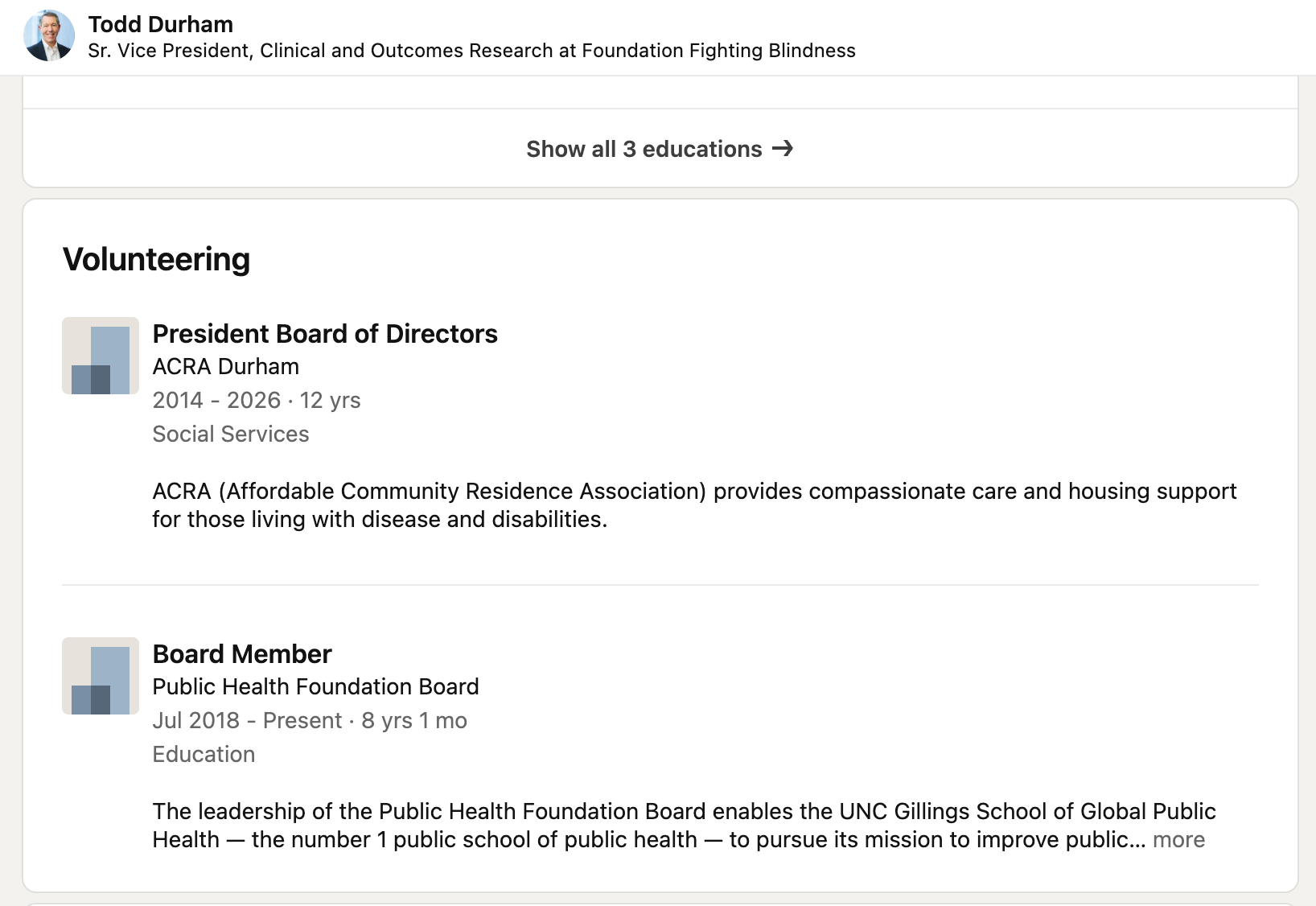
On paper that title sounds good. But what makes a Consumer of Peptides? Are they doctors, pharmacists or maybe, imagine this, patients…..That is what it sounds like.
It makes you think that someone was chosen to represent the interests of patients, not the people who work in the industry or the government. When I looked into his background I found something more complicated. To be clear I did not find anything that proves Dr. Durham broke any ethics laws.
I did not find anything that proves he had a conflict that is not allowed under 18 U.S.C. §208. Those are things that lawyers would have to decide. They would need to see the FDAs ethics records.
What I did find makes me wonder something.
Was Dr. Durham the person that most Americans would want to have on the committee representing the people who use the products?
Dr. Durham is not someone who usually advocates for patients.
He is a biostatistician, which means he works with numbers and statistics. He has spent most of his career working with the people who make pharmaceuticals.
His resume from the FDA says that he has been working on trials sending in paperwork to get approvals doing research after the products are on the market and coming up with strategies for making new drugs.
He has worked for companies like Quintiles, Bristol Myers Squibb, Inspire Pharmaceuticals and Novan. He even has his company that does statistical consulting.
Now Dr. Durham works as the Senior Vice President for Clinical and Outcomes Research at the Foundation Fighting Blindness. There is nothing worng with that.
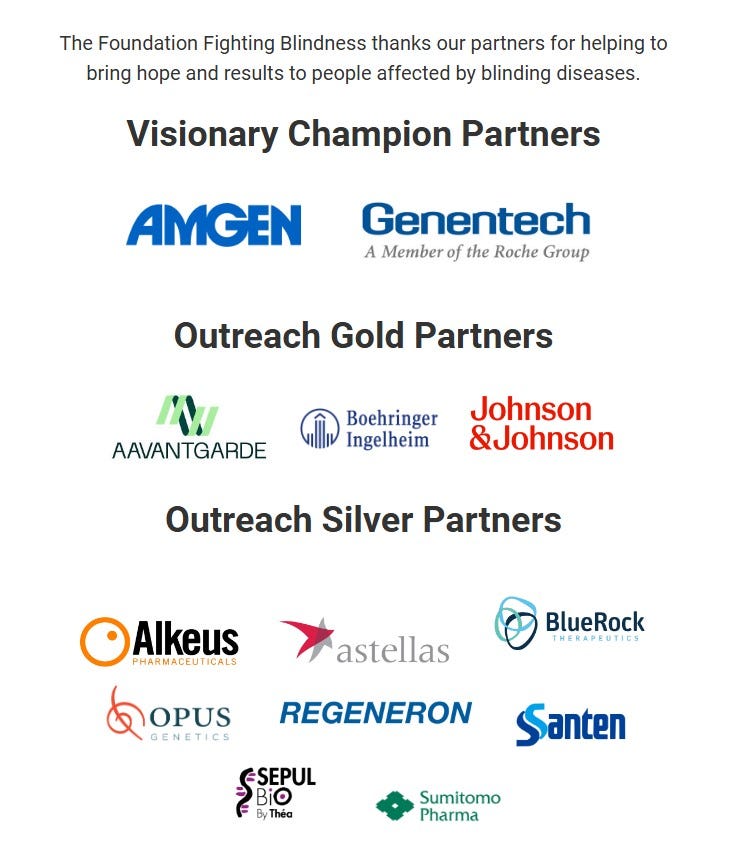
The Foundation Fighting Blindness does work connected to the biotechnology industry.
In April 2025 Dr. Durham went to a meeting with the Institute for Clinical and Economic Review (ICER).
Records indicate he said that the Foundation gets money from healthcare companies to help pay for conferences. In the records reviewed he said that the Foundations venture-philanthropy arm, the RD Fund owns parts of life-science companies.
In the records I reviewed he also said that someone in his household gets at twenty-five percent of their income from the life-sciences industry. Those things do not mean that Dr. Durham did anything They just mean that he is close to the industry.
That is important.
The people who serve on advisory committees like Dr. Durham have to go through an ethics review. This is because the government knows that the people who are experts in a field often work in that field and that can cause problems.
The question is not whether Dr. Durham is experienced.
The question is whether the FDA really looked at his connections to the industry before they made him the Consumer Representative.
The Foundation Fighting Blindness also works with the biotechnology industry in financial ways. It invests in life-science companies and the people who run it are part of groups that try to make it easier to develop gene therapies. His company is not a neutral entity. It operates deep inside the commercial drug-development ecosystem.
None of those things are bad.
They make you wonder if Dr. Durham is really the right person to be the Consumer Representative. There is something that I want to point out.
I saw some things online that said Dr. Durham or the Foundation Fighting Blindness gets money from companies like Novo Nordisk or Amgen.
This article is not really about Todd Durham.

It is about being transparent. It’s about the FDA rushing inappropriate people to counter a panel of Clinical Experts in the field……..
If the FDA decided that Dr. Durham’s connections to the industry were not a problem then they should show us how they made that decision.
If the FDA did the ethics review that they are supposed to do then the public should be able to see how they did it. Because we do not trust the committees just because we assume that everyone on them is unbiased. We trust them because we can see that they looked at any problems and dealt with them before they made any decisions.
That is why I think the FDA should release the information, about Dr. Durham’s appointment, including any disclosures, conflict analyses or waivers that they considered before they let him be the Consumer Representative.
The issue is not whether Dr. Durham acted improperly. I have seen no evidence that he did. The issue is whether the FDA clearly explained why he was selected as the Consumer Representative, how any relevant relationships were evaluated, and how that appointment served the committee's mission. Transparency should answer those questions without requiring speculation.
By the way, Mr Durham cast all votes, all no votes. If he was not on the committee the 8-6, 8-5 votes would not be characterized as squeezing through……
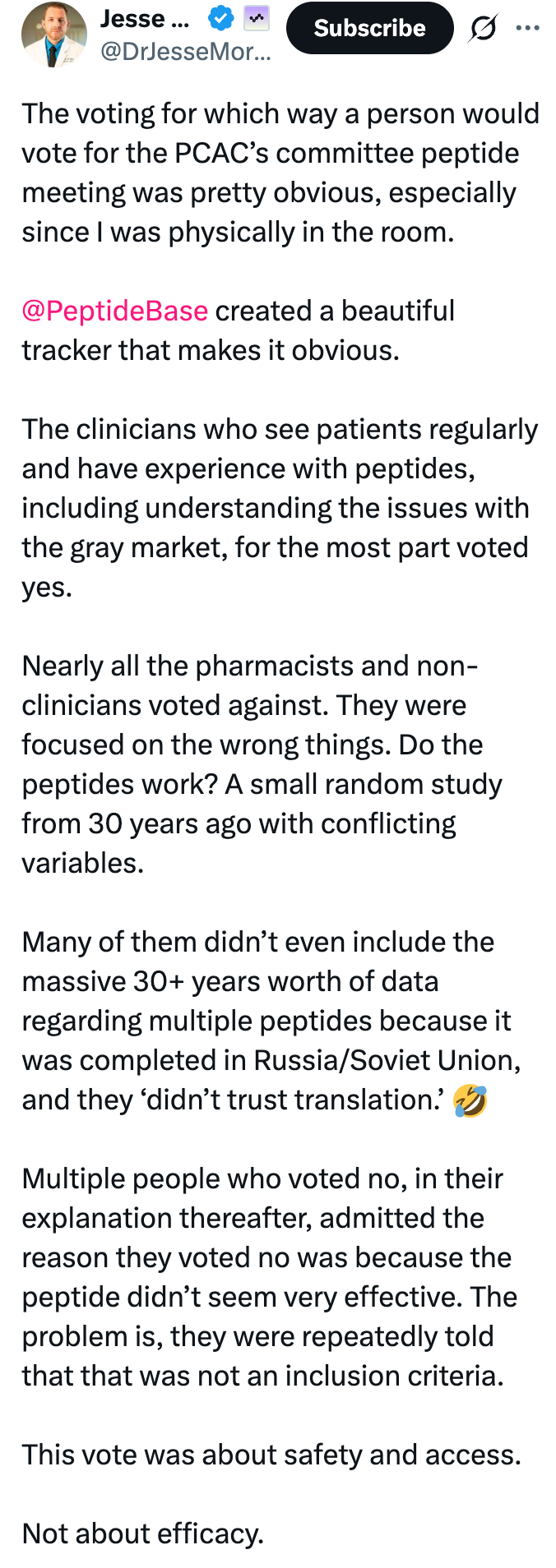
from Dr. Jesse Morse, MD
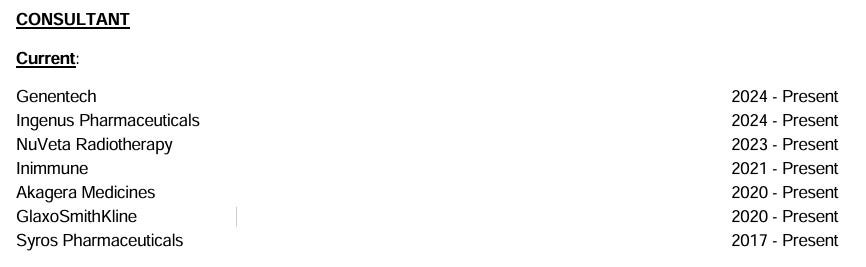
Dr. Zamboni is an internationally respected pharmacologist at the University of North Carolina whose work has advanced the fields of nanomedicine, pharmacokinetics, antibody-drug conjugates, and drug delivery.
His curriculum vitae reflects decades of NIH-funded research, FDA-funded collaborative projects, leadership on numerous scientific advisory boards, and collaborations with both academia and the biotechnology industry. He has also founded or led several companies focused on translational drug development and pharmacology.
None of this suggests that Dr. Zamboni, also a temporary member acted improperly, nor does it suggest that he violated any federal ethics rules.
In many respects, his career represents the very model of modern translational science, where academic investigators, government agencies, and private industry frequently collaborate to move promising therapies from the laboratory to the clinic.
The question I found myself asking here was a different one.
Why was one of the country’s foremost experts in cancer pharmacology, nanomedicine, and complex drug delivery selected to vote on a committee evaluating compounded peptides? The least complex of almost all molecules….
That is not a criticism of Dr. Zamboni. It is a question about committee design.
Advisory committees work best when their expertise closely matches the scientific questions before them. If the FDA believed Dr. Zamboni’s experience in complex drug characterization, pharmacokinetics, and analytical chemistry was directly relevant to the issues surrounding peptide compounding, that rationale should be clearly articulated.
Transparency in committee selection is just as important as transparency in the scientific evidence itself.
The public should not have to speculate why any particular expert was chosen. A well-constructed advisory committee should be able to explain not only who was selected, but why each member’s expertise was essential to answering the questions before the panel.
When we are debating what is best for America, it is important to get opinions from all sides. This is why the public comment section is so very important. Many of the “public” speakers worked for foundations with flowery names like “Center for Evidence Based Medicines” that were directly or indirectly funded through Pharmaceutical companies with an oxe to be gored in this debate.
This is also why getting experts on peptides from all walks of life would have been the right move here with the PCAC.
Instead, the majority of the FDA temporary members had no experience with peptide use. Which, wouldn’t be viewed in such a negative light, if they didn’t play chicanery with PCAC members titles, like Todd Durham PhD, Consumer Representative.
Today it is peptides. Tomorrow it could be stem cells, gene therapy, psychedelics, AI diagnostics, or the next generation of longevity medicine. The process matters because the precedent matters.
Five Questions Every American Should Ask After Every Advisory Committee
Scientific advisory committees influence the medicines we use, the treatments physicians can prescribe, and ultimately the direction of medical innovation.
Regardless of the topic, every citizen should ask five simple questions.
1. What evidence did the committee actually receive?
Not what evidence exists somewhere. Not what was submitted to the docket.
What evidence was actually reviewed by committee members before they voted?
Those are not always the same thing.
2. Was additional evidence submitted after the briefing documents were written?
Science does not stop while briefing documents are being prepared.
If meaningful new information was submitted before the meeting, was it incorporated into the committee’s review?
If not, why not?
3. Who selected the committee?
Permanent members.
Temporary members.
Consumer representatives.
Subject matter experts.
Every appointment should have a clear rationale that can withstand public scrutiny.
Expertise matters. Balance matters. Both deserve explanation.
4. Were financial relationships disclosed and evaluated?
The important question is not whether someone has worked with industry.
Many of the world’s leading scientists have.
The important question is whether those relationships were disclosed, reviewed, and managed according to established ethics standards.
Disclosure builds confidence. Concealment destroys it.
5. Could another independent scientific panel reasonably reach the same conclusion?
Science should be reproducible.
Not only in the laboratory.
In the decision-making process itself.
If another qualified panel reviewed the same evidence using the same standards, would they reasonably arrive at the same conclusion?
That is one of the strongest indicators of a robust scientific process.
The Decline of Reporting in the Age of Medical Theater
If there has been a casualty to be found in modern medicine, it is not scientific rigor. It is the way we report on science.
At some point, medical journalism forsook its role of explaining how science is done and began to cover it with the same flair as a political campaign. You will find that any given controversy is now framed with opposing sides, stark moral lines and a need for drama. There have to be villains who put profit before their patients and heroes standing in the public’s defense. It makes for a good headline, but little in the way of an honest grasp of the science.
Add on top of that sloppy reporting because a journalist doesn’t understand the molecules or the ecosystem and you get quite a mess. Which is the issue over at places like the NY Times and Time itself…….
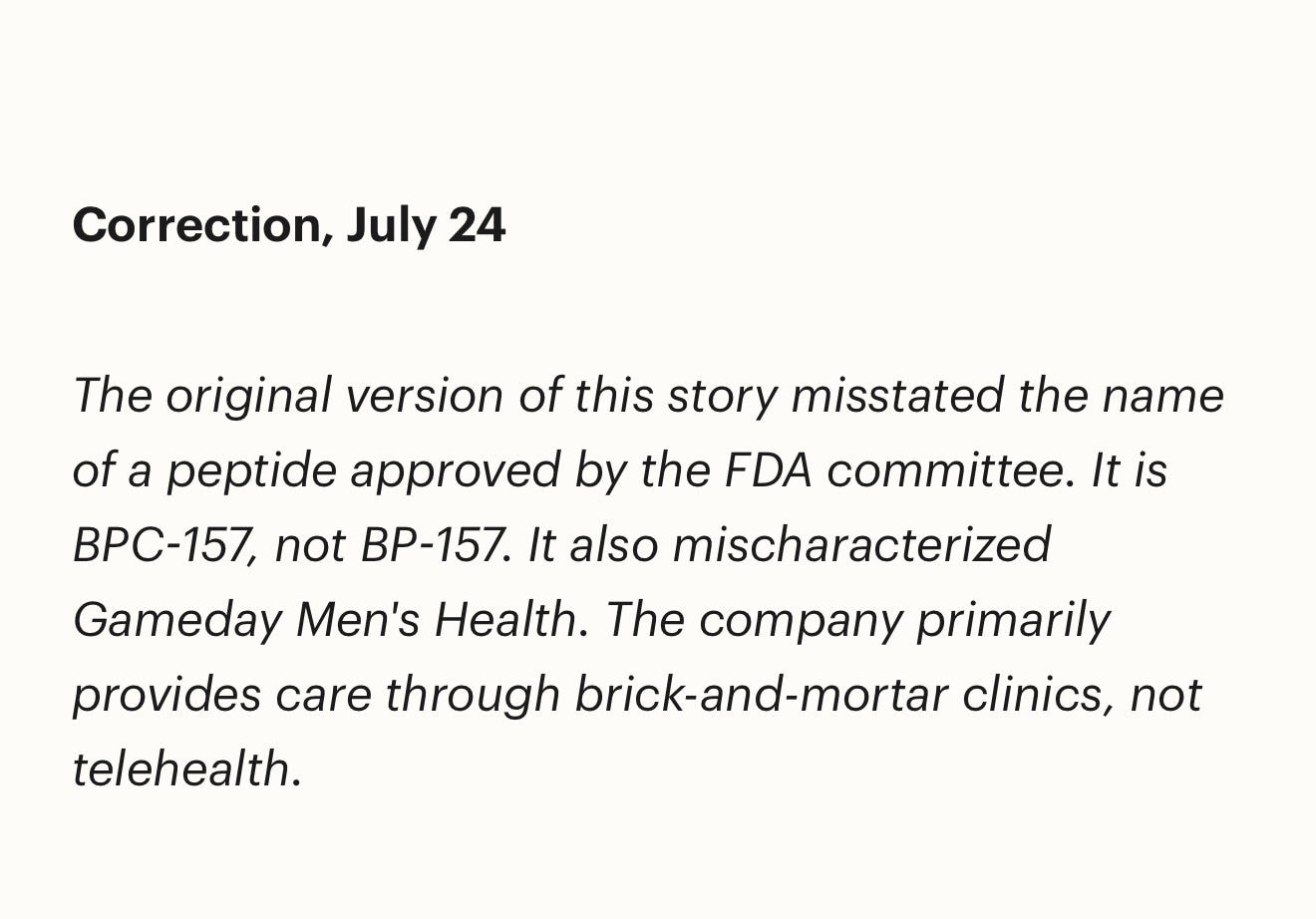
But alas, I told this reporter on X they were in over their heads and not capable of reporting fairly on this topic. Despite that, they had a deadline. Which results in the typical click bait “Profiteer Pirate Dr. Hal” Luckily, cooler heads prevailed and he kindly approached said reporter……perhaps if she got sources and spoke with him first, this could have been spared…..

Don’t get me wrong, at times I can be sensational too. But I strive to get it right first, not be first……Who the heck mistakes BPC?
How the FDA Could Redraw the Future of Longevity Medicine

For years, peptides have existed in one of medicine’s grayest zones. They have been embraced by longevity physicians, dismissed by skeptics, promoted by influencers, compounded by specialty pharmacies, and purchased from anonymous websites around the world. Yet despite all of the debate, one question has remained largely unanswered:
Take the recent row over peptides, the coverage would have you believe this was a stand-off between reckless doctors intent on filling the country with hazardous compounds and the valiant scientists at the FDA. Once one buys into that story, the rest of the facts are filtered accordingly: a physician using peptides is a “grifter,” a pharmacist is seen as gaming the system, and regulators are presumed impartial by virtue of their government posts while any researcher with favorable data is met with distrust.
This is a far cry from what a scientific dispute really is.
In truth, when you have a major medical controversy, you are usually looking at intelligent people of good will who have looked at the same evidence and come away with different views. One may see enough to warrant a cautious approach in the clinic; another will say the manufacturing does not meet the mark. A regulator might be concerned with the uncertainties of characterization whereas a clinician has years of patient experience to rely on. These are judgments based on the type of evidence at hand, not matters of morality.
But such nuance does not make it from the conference room to the evening news. Reporters are more interested in assigning blame or declaring a winner than in finding out why the experts could not agree. In doing so, the personalities overshadow the process.
This is a fundamental misunderstanding of the enterprise. Disagreement is no sign that the system is broken; if anything, it is proof the system is working. Every significant leap in medicine has had to contend with competing interpretations and robust debate. Consensus is the destination of discovery, not the place where it begins.
Journalism has an important job to do in these instances. It should not be in the business of erasing uncertainty or forcing a complex issue into a tidy narrative. A better reporter will show the reader what underpins each expert’s position and what remains in question. That means getting past the press release to read the primary literature, to deal with methodology and not just the people involved, and to display some intellectual humility.
An informed public has no use for being told who the bad guys are. What is needed is the transparency to see how a conclusion was made and to decide for oneself if it can be trusted. That is what journalism ought to be about.
The government ought to be held to the highest of standards.
Over the course of my career I have worked in close proximity to a number of government agencies. As is the case for most physicians, my dealings have been with the FDA, CDC and CMS, as well as state health departments, hospital regulators and licensing boards. What they do is essential work, often hard and without much thanks. One could say that millions of Americans are in better health today because public servants have put in the decades required to put in place systems that guard against bad science, unsafe drugs and contaminated products.
For that reason, any criticism levelled at the government should not start from an assumption of bad faith, but from higher expectations.
Take the FDA. Its authority does not come merely from the fact that Congress put it in place. The agency’s reach is felt in almost every part of modern medicine, from the therapies a doctor can prescribe to the manufacturing standards and the drugs that make it to market. That kind of influence entails more than just making a decision; there is an onus on them to show how they arrived at it.
Science has always been about open scrutiny. A researcher is expected to put his methods and assumptions on the table, note where the limitations are and give others enough to go on to challenge or evaluate the work. We do not advance the field by asking people to take conclusions on faith. We do so by putting the evidence out in the open.
Regulatory science should be no different.
If an advisory committee comes to some important conclusion, the public needs to know what was reviewed and what was left out, how the experts were chosen and how any conflicts were put to rest. Transparency of this sort is not a burden on the government but a cornerstone of public confidence.
Leave those questions unaddressed and speculation will fill the void. Some will see political motives, others industry meddling, and still others will think the regulator has something to hide. It hardly matters if the assumption is warranted; the lack of clarity is enough to wear down trust. People do not lose faith over one decision. They lose it when they feel shut out of the process.
So transparency is not a matter of public relations. It is good governance. An agency should not expect Americans to put their trust in it simply by virtue of its regulatory power. It must earn that trust by showing its hand, by having fair processes and decisions that can stand up to being examined.
There is an irony in it: transparency is as much a protection for the government as for the public. Put your work on display and you will find that even those who do not agree with the result will have more confidence in it. Conspiracy theories tend to wither when there is nothing to feed on. In medicine as in science, you do not build trust by having difficult questions go unasked. You build it by answering them.
Transparency Protects Everyone
As I reflect on everything that transpired during the recent FDA Pharmacy Compounding Advisory Committee meeting, I find myself returning to one simple conclusion.
This should never have been framed as regulators versus physicians, pharmaceutical companies versus compounders, or science versus innovation. Those narratives make for compelling headlines, but they do little to advance medicine. The real issue has always been whether the public can have confidence that important decisions were made after considering the fullest and most current body of scientific evidence.
That is why transparency matters.
Transparency is what protects us all.
One might be tempted to see this as a matter of regulators pitted against physicians, or pharmaceutical companies against compounders, or even science in opposition to innovation. Such stories are fine for a headline but they do not do much to move medicine along. The question at hand has always been whether the public can trust that important decisions have been made with the most current and complete scientific evidence in mind.
The patient is protected by transparency; he or she should know treatments are being judged on evidence, not on politics or some form of institutional inertia. The physician who has to account for those decisions to someone in the examination room is protected. So too are the pharmaceutical companies that put extraordinary resources into new therapies and are due a regulatory process that is fair and predictable. And compounding pharmacies, whose work ought to be measured by manufacturing quality and hard data rather than sweeping assumptions about the profession.
In a way, the FDA is protected as well. A regulatory body with its feet firmly planted in sound science has no reason to shy away from scrutiny. On the contrary, an institution is strengthened when it is willing to let the public see how it evaluated the evidence, why certain experts were brought in and how it handled any conflicts of interest. People will have more confidence if they can look at the process themselves; without that, suspicion is what will grow.
We are taught by the history of science that disagreement is part of the territory. Every major medical advance has been put to the test and occasionally overturned by better evidence. There is nothing wrong with that; it is one of science’s strengths. Regulatory decision making should be no different. If the reasoning is out in the open, then researchers and clinicians can point out flaws and manufacturers can make improvements. It is a productive kind of discord that allows science to progress.
Opacity is where everyone comes out behind. Patients will doubt your recommendations, physicians will be less confident, and industry will wonder at the consistency. Regulators will be met with skepticism over what may be perfectly sound decisions simply because the thinking behind them is obscured.
What is called for is not less oversight or fewer experts, nor more strident advocacy from either camp.
It is transparency. Put the evidence on the table. Don’t hide it or refuse to look at it because “It’s in Russian” Make clear why committee members were chosen, titled and how you arrived at your conclusions so that even those who take issue with the result can follow the logic. In this way science gains credibility and government the trust it needs. Given how tenuous public confidence in both has become, this is not merely a matter of good policy.
It is an obligation.
To A Life Well Lived,
-Dr. M