
When Cells Ask for Help
Understanding When and How to Use GDF-15 Testing

On Diary of a CEO the other day, Mitochondrial Expert Martin Picard educated Steven Bartlett about the mysteries of energy medicine, grey hair and mitochondria.
He was remarkably taken aback by the information. A bright guy, Steven recognized his paradigm had been shifted. Welcome, dear sir, welcome to the Rabbit Hole.
It is becoming clear, physicians, clinicians and the healthcare ecosystem will need to learn precisely about energy, biophysics and the mitochondria.
Today I am going to give you some “weekend reading” if you will. I am going to reveal how to use the test Dr Picard suggests measuring to evaluate how well your energy is flowing and how well you mitochondria are doing.
Are you ready? Let’s Dig Deep and get down this rabbit hole.

But first, please remember to subscribe. We cannot provide this excellent content without your support. We owe a tremendous thanks to Sarah and the rest of our community at Longevity Insider. Come see what all the doctors are reading.
A few years ago, if you had asked me what the most important laboratory tests in medicine were, I probably would have answered the way most internists would. Troponin changed cardiology. Hemoglobin A1c transformed diabetes. PSA altered how we think about prostate cancer. Cystatin C is slowly becoming synonymous with kidney function. These are remarkable biomarkers because they allow us to recognize disease with a degree of confidence that physicians a generation ago could scarcely imagine.
But the longer I have practiced longevity medicine, the less interested I have become in biomarkers of disease and the more interested I have become in biomarkers of adaptation. Warning shots from the Hallkmarks of Aging to be precise.
That distinction may sound subtle, but I think it represents one of the biggest philosophical shifts occurring in medicine today.
Disease is often the final chapter of a story that began decades earlier.
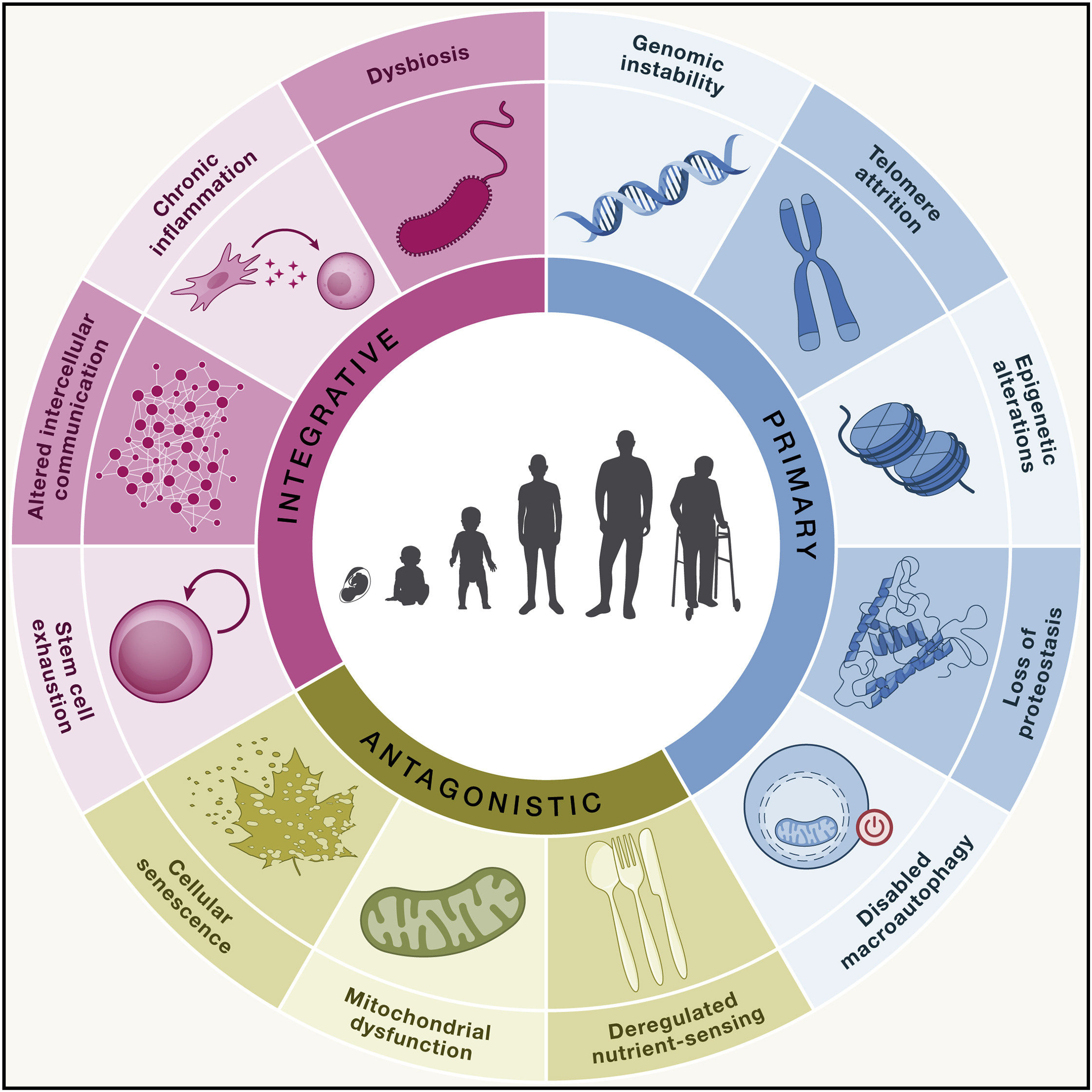
The biology that determines whether someone becomes frail at seventy-five, develops heart failure at sixty-eight, or spends ten years struggling with chronic fatigue rarely begins when the diagnosis appears in the chart. The biology begins much earlier, when cells are still adapting, still compensating, still fighting to maintain homeostasis.
If we are serious about extending healthspan rather than simply treating disease, then those earlier conversations become infinitely more interesting.
One of the recurring themes in this newsletter has been that mitochondria are not simply power plants. They are information processors. They continuously integrate nutrient availability, oxygen tension, inflammatory signaling, mechanical stress, circadian rhythms, DNA damage, and hundreds of other inputs before deciding how a cell should respond. When they are healthy, that response is remarkably elegant. Energy production increases. Repair pathways activate. Damaged proteins are recycled. Autophagy accelerates. The cell survives. I believe these little buddies are actually the CEO of the cell. And like many CEO’s
There comes a point when compensation begins to fail.
For years I imagined that this transition happened quietly. A mitochondrion became dysfunctional, ATP production declined, oxidative stress increased, and eventually the cell deteriorated. It was a very mechanistic view of biology.
It turns out the cell is far more communicative than I appreciated.
Cells do not simply fail.
They complain.
This is that story. Keep reading and I will teach you how GDF-15 is used today and how it should be used in Longevity Medicine and the future.
If GDF-15 is a distress signal, then the obvious question becomes: where does it come from?
The answer is both simple and remarkably elegant.
Almost every cell in the body has the capacity to produce GDF-15, but under normal circumstances very little is released into the circulation. Healthy cells are busy generating energy, repairing DNA, recycling damaged proteins, and maintaining homeostasis. They have no reason to announce themselves.
That changes the moment a cell begins to struggle.
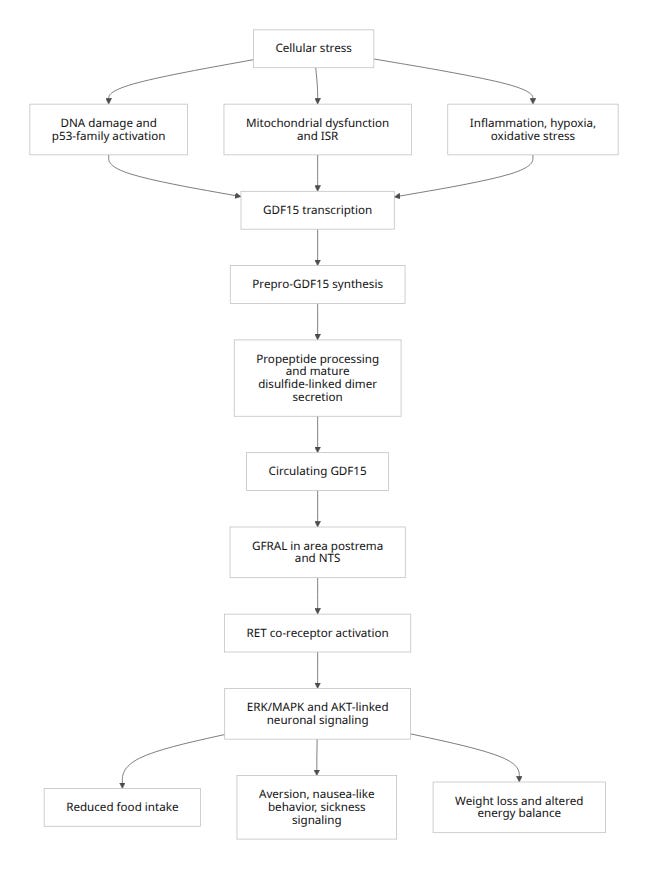
When mitochondria lose efficiency, when oxidative stress begins to accumulate, when DNA damage exceeds the cell’s ability to repair it, or when inflammation pushes a tissue beyond its normal adaptive capacity, one of the programs that becomes activated is the production of GDF-15. It is not released because a single disease is present. It is released because the cell has entered a conserved stress response that has been refined over hundreds of millions of years of evolution.
From a biological perspective, GDF-15 belongs to the transforming growth factor-beta (TGF-β) superfamily, although it behaves quite differently from many of its relatives. It is synthesized as an inactive precursor protein before being cleaved into its mature form, which circulates through the bloodstream as a stable disulfide-linked dimer. In other words, the molecule that eventually appears on a laboratory report is the final product of a highly regulated intracellular decision: this cell is under enough stress that the rest of the organism needs to know about it.

That message does not simply drift aimlessly through the circulation. It has a destination.
One of the most fascinating discoveries in the GDF-15 story came only a few years ago, when several research groups independently identified its receptor. Rather than acting throughout the body, circulating GDF-15 primarily targets a remarkably specific region of the brainstem through the GFRAL-RET receptor complex, located within the area postrema and nucleus tractus solitarius. These are ancient regions of the brain responsible for monitoring the body’s internal environment and coordinating responses to physiological threat.
Once that receptor is activated, the response is almost instinctive. Appetite declines. Food becomes less appealing. Nausea may develop. Activity decreases. Energy is conserved. In severe illness, cancer, pregnancy, toxic exposure, or profound mitochondrial dysfunction, these responses become even more pronounced.
At first glance, those effects seem maladaptive. Why would the body suppress appetite precisely when illness increases metabolic demands?
Evolution provides the answer.
For most of human history, severe illness was not treated in an intensive care unit. It was survived, or it wasn’t. Continuing to hunt, forage, or expend precious energy while every cell in the body was under stress would have been a poor survival strategy. GDF-15 appears to be part of an ancient biological program that tells the organism to shift its priorities away from growth and toward survival. It is less a disease molecule than an emergency broadcast system.
Remember Sharing is Caring! Help Me Help Others! Share this post. Thank you
That perspective also explains why GDF-15 appears in such a remarkable range of clinical conditions. It rises in mitochondrial disease because dysfunctional mitochondria activate the integrated stress response. It rises in heart failure because cardiomyocytes are under energetic strain. It rises in chronic kidney disease, diabetes, liver disease, cancer, pregnancy, and advanced aging because each of these conditions places cells under persistent physiological stress, even though the underlying diseases are entirely different.
This is where many clinicians initially become frustrated with GDF-15.
It is not disease-specific.
I would argue that this is precisely its greatest strength.
Troponin tells us the heart has been injured. Cystatin C tells us the kidneys are failing. GDF-15 asks a far more fundamental question: How hard are this patient’s cells working simply to maintain equilibrium?
That is a very different kind of biomarker. And for those of us interested in longevity medicine, it may ultimately prove to be the more interesting one.

The role of GDF-15 in immune modulation. In various pathological conditions, GDF-15 correlates inversely with the ability of T cell to infiltrate the tumor, placenta, or the infarcted myocardium. As the most prominent physiological expression of GDF-15 is found in the placenta it may have evolved to protect the (semi-allogeneic) fetus by establishing a protective barrier at the placenta-fetal junction, thus shielding the fetus against maternal T cells.
For years, scientists knew the molecule existed, but they had no idea what it was trying to say.
When GDF-15 was first described in the late 1990s, it was given a name that reflected what investigators thought they had discovered: macrophage inhibitory cytokine-1, or MIC-1. Like many proteins discovered before their biology was understood, it accumulated multiple names as different laboratories encountered it in different diseases. It appeared in cancer research. It appeared in cardiovascular biology. It appeared in inflammation. Every field thought it had found its own molecule. Just like how I laugh when each medical “specialty” field discovers pieces of the hallmarks of aging as if they are finding the Rosetta Stone, when we have been working from this paradigm for at least a decade now.
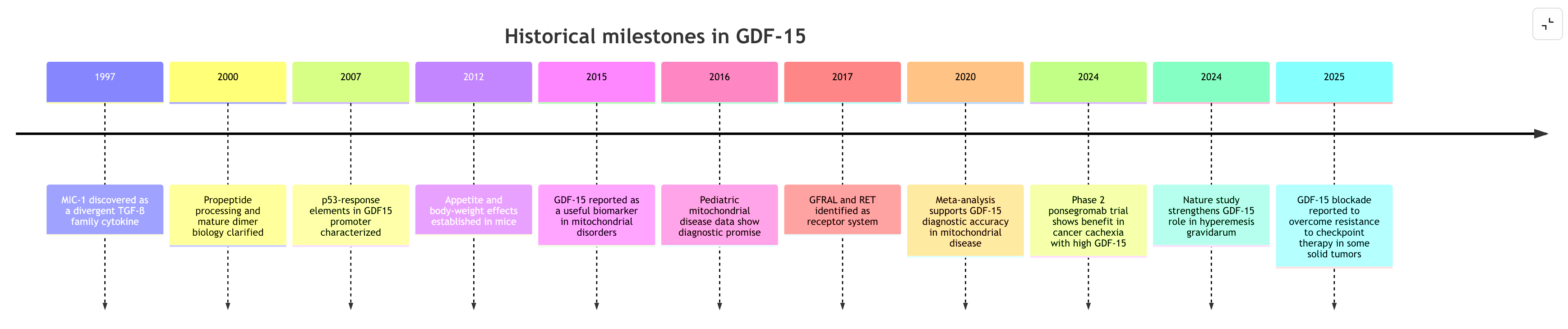
Only later did it become clear that everyone had been studying the same messenger from different angles. Eventually the field settled on the name Growth Differentiation Factor-15, or GDF-15, but even that name fails to capture what the protein actually does.
It is not primarily a growth factor.
It is not simply a differentiation factor.
It is, in many respects, one of the body’s most sophisticated stress communicators.
Like many biological signals, GDF-15 begins life as an inactive precursor. Inside the cell it is assembled as a larger protein, folded, chemically modified, and then enzymatically cleaved into its mature form before being released into the circulation as a stable two-part molecule. The biochemistry is elegant, but the broader lesson is perhaps more important. Cells do not release GDF-15 accidentally. Considerable energy is invested in manufacturing it, processing it, and exporting it. Evolution rarely spends that much effort on a molecule unless the message it carries is important.
Under healthy conditions, relatively little GDF-15 circulates through the bloodstream. Most adult tissues produce only small amounts. One notable exception is pregnancy, where the placenta becomes an extraordinary source of GDF-15. In fact, circulating concentrations can rise to levels that would otherwise suggest severe illness.
That observation puzzled investigators for years until it became apparent that the placenta is, in many ways, an organ whose entire purpose is communication. It continuously negotiates nutrient delivery, immune tolerance, fetal growth, and maternal adaptation. It is perhaps not surprising that one of the body’s most powerful signaling molecules would play an important role there as well.
Outside of pregnancy, however, the story changes dramatically.
When tissues become stressed, entirely different organs begin contributing to the circulating pool of GDF-15. Skeletal muscle releases it during mitochondrial dysfunction. Cardiomyocytes release it when the heart is under pressure. The kidneys produce it during tubular injury. Hepatocytes increase production during metabolic stress. Endothelial cells, immune cells, and even tumors join the conversation. What appears in the bloodstream is no longer the voice of a single organ. It is the collective response of a body attempting to adapt to adversity.

This is one of the reasons GDF-15 is so fascinating from the perspective of longevity medicine. It is not reporting on one disease. It is reporting on a shared biological language spoken by many different tissues when homeostasis begins to fail.
The question, then, becomes what tells these cells to start talking in the first place?

The answer leads us into one of the most important concepts in modern geroscience: the integrated stress response.
Every cell possesses an extraordinary surveillance system. It is constantly asking whether DNA has been damaged, whether proteins are folding correctly, whether oxygen is adequate, whether nutrients are available, and perhaps most importantly, whether the mitochondria are still able to meet the energetic demands of the cell. When those systems begin to falter, ancient genetic programs are activated. Among the central conductors of this response are transcription factors such as p53, often called the “guardian of the genome,” along with ATF4 and CHOP, two master regulators of the mitochondrial integrated stress response. Together they begin reprogramming cellular behavior, shifting resources away from growth and toward survival. One of the genes they consistently activate is GDF-15.
That observation fundamentally changed how I think about this biomarker.
An elevated GDF-15 is not simply telling me that inflammation is present or that mitochondria are dysfunctional.
It is telling me that the cell has made a decision.
It has decided that ordinary adaptive mechanisms are no longer enough.
It has crossed the threshold into a coordinated stress program.
That is a very different biological event.
The final piece of this puzzle remained elusive until 2017, when several research groups independently solved what had become one of the field’s biggest mysteries. Where exactly was GDF-15 delivering its message?
The answer surprised almost everyone.
Rather than acting broadly throughout the body, circulating GDF-15 docks onto a highly specialized receptor known as GFRAL, which is found almost exclusively within two tiny structures in the brainstem: the area postrema and the nucleus tractus solitarius. These regions function as the body’s biological command center for physiological threat detection. They continuously monitor blood-borne signals and coordinate responses that favor survival over growth.
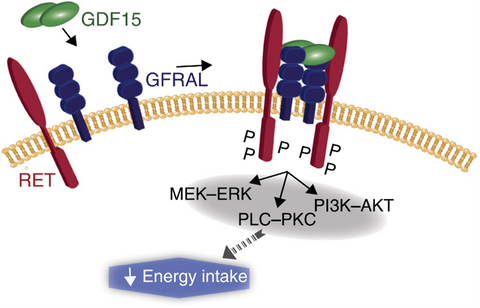
Suddenly, decades of confusing observations made sense.
Why do patients with severe cancer lose their appetite?
Why does profound mitochondrial disease often produce weight loss?
Why do toxic exposures, chronic inflammation, pregnancy, and advanced illness all generate similar feelings of nausea, malaise, and reduced food intake?
For my athletes, why do pushing to extremes cause such severe nausea? Seriously, when I was training for state championships in swimming, we had trash cans at our lanes so we wouldn’t run to the bathroom for the “dry heaves” Because time mattered for training.
My Protocols: Dosing Myself AND Others with Rapamycin.

On LinkedIN today it is revealed by Krister Kauppi that I am taking Rapamycin with good effect. Most doctors don’t like to share their medical histories or their medicine or supplement use. Since Krister is mentioning my outcomes with Rapamycin I figured it is time for my readers to understand why I use this medicine and what I hope to gain from it. But first, my history. I was a collegiate (albeit brief) swimmer before I discovered “socializing” in college. So for every 10,000 yd practice I managed to have less salubrious activity. Unfortunately and fortunately this all stopped in medical school as there is no time for those shenanigans.
These seemingly unrelated conditions were all activating the same ancient neural circuitry.
GDF-15 was not functioning as a satiety hormone, telling the body that enough calories had been consumed. It was functioning as a survival hormone, informing the brain that something was wrong and that physiology needed to change accordingly. Appetite falls. Activity decreases. Energy is conserved. The organism shifts from expansion to preservation.
There is still much we do not know.
Researchers continue to debate whether GDF-15 has important receptors outside the brainstem or whether many of its peripheral associations simply reflect the tissues producing it rather than responding to it. That distinction is more than an academic curiosity. It reminds us to avoid confusing biomarkers with mechanisms. A molecule can be an extraordinarily accurate indicator of cellular distress without necessarily being the primary cause of the disease in which it is elevated.
For clinicians, that is an important lesson. GDF-15 is not simply another cytokine. It is one of the clearest windows we currently have into the decision-making process of a stressed cell. When it rises, it tells us that somewhere in the body, physiology has shifted from maintaining normal function to protecting survival itself.
Once you understand what GDF-15 is trying to accomplish, another observation becomes almost impossible to ignore.
It seems to be elevated everywhere.
Open almost any medical journal today and you will eventually encounter GDF-15.
Neurologists write about it.
Cardiologists study it.
Nephrologists measure it.
Oncologists are now targeting it therapeutically.
Geriatricians recognize it as one of the strongest circulating predictors of frailty and mortality.
Even obstetricians have found that one of the highest physiological concentrations of GDF-15 occurs during normal pregnancy.
At first glance, this appears to be a weakness.
How can a biomarker be clinically useful if it is elevated in so many different conditions?
I would argue that this is exactly backwards.
The remarkable thing about GDF-15 is not that it rises in so many diseases.
The remarkable thing is that all of those diseases appear to converge upon the same underlying biology.
That observation tells us something profound about chronic disease itself.
Perhaps these conditions are not as different as we have always imagined.
The first place this became obvious was in mitochondrial medicine.
Long before longevity physicians began paying attention to GDF-15, mitochondrial specialists had already recognized its value.
Patients with primary mitochondrial disease, particularly those with muscle involvement and mitochondrial DNA disorders, consistently demonstrate some of the highest circulating levels of GDF-15 observed outside of pregnancy. In the landmark adult studies, concentrations were roughly six times higher than those seen in healthy individuals, and subsequent investigations confirmed that GDF-15 outperformed many of the blood tests we had traditionally relied upon to screen for mitochondrial disease. A 2020 meta-analysis ultimately concluded that GDF-15 had the highest overall diagnostic accuracy among currently available circulating biomarkers for primary mitochondrial disease.
That finding was not simply another statistical victory.
It taught us something about mitochondrial biology.
When oxidative phosphorylation begins to fail, the mitochondria do not quietly produce less ATP. They activate the integrated stress response that we discussed earlier. ATF4 and CHOP become engaged, adaptive genetic programs are switched on, and one of the downstream products released into the circulation is GDF-15. What we measure in the laboratory is not the mitochondrial defect itself. We are measuring the cell’s systemic response to that defect.

That distinction becomes critically important because it explains both the strengths and the limitations of the biomarker.
GDF-15 performs particularly well in patients whose disease prominently affects skeletal muscle, especially classic mitochondrial DNA deletion syndromes and disorders such as MELAS caused by the m.3243A>G mutation. It becomes less reliable in patients whose disease is driven by nuclear genes, presents without significant myopathy, or manifests predominantly in childhood. In fact, several pediatric studies have shown that another mitochondrial biomarker, FGF21, may outperform GDF-15 in certain clinical settings because children with cardiac, hepatic, inflammatory, or renal disease can also develop substantial elevations in GDF-15.
There is an important lesson hiding inside those data.
GDF-15 is not a mitochondrial biomarker because mitochondria are uniquely capable of producing it.
It is a mitochondrial biomarker because mitochondrial dysfunction represents one of the most powerful activators of cellular stress.
Once you appreciate that distinction, it becomes almost inevitable that GDF-15 would appear far beyond inherited mitochondrial disease.
And that is exactly what happened.
As investigators began measuring GDF-15 in larger and more diverse populations, a fascinating pattern emerged.
The molecule seemed to follow aging itself.
Older adults with higher GDF-15 levels consistently demonstrated poorer physical function, greater frailty, slower gait speed, weaker grip strength, higher disability rates, and increased mortality. It became one of the most reproducible circulating biomarkers associated with biological aging. Not chronological aging, but biological aging. Individuals of the same age often had dramatically different GDF-15 levels, suggesting that what we were measuring was not simply the passage of time but the cumulative burden of physiological stress experienced over a lifetime.
That observation immediately attracted the attention of the geroscience community.
Could GDF-15 actually be driving aging?
The answer, at least for now, appears to be “not so fast”. To quote the Late Lee Corso.

Human genetic studies have been surprisingly reassuring. Individuals born with naturally altered GDF-15 biology do not develop the dramatic cardiometabolic phenotypes one might expect if GDF-15 itself were the primary cause of aging. Instead, the evidence increasingly supports a different interpretation. GDF-15 behaves much like the smoke rising from a fire. It tells us that cellular stress is occurring. It does not necessarily tell us that it started the fire.
That distinction is more than academic.
It changes how we should use the test.
As longevity physicians, we should resist the temptation to “treat the GDF-15.”
Instead, we should ask why the cell felt compelled to release it in the first place. Then use it as a biomarker to reducing the smoke and extinguishing the fire.
This same story repeats
In cardiology, GDF-15 has evolved from an experimental biomarker into a clinically useful prognostic tool. It does not diagnose myocardial infarction better than troponin, nor does it replace natriuretic peptides in heart failure. Instead, it adds another dimension to risk by reflecting the cumulative burden of cellular stress within the cardiovascular system. Patients with higher GDF-15 levels are consistently more likely to experience heart failure progression, cardiovascular death, and adverse outcomes, even after accounting for many traditional risk factors.
In oncology, the story becomes even more intriguing.
For years, elevated GDF-15 was simply considered another poor prognostic marker. Then researchers began asking a different question. What if the tumor was not merely producing GDF-15, but actively using it?
Recent clinical trials suggest exactly that. Blocking GDF-15 signaling in patients with cancer cachexia improves appetite and body weight, and newer immunotherapy studies suggest that neutralizing GDF-15 may even help overcome resistance to checkpoint inhibitors in selected cancers. For perhaps the first time, a molecule that began its clinical life as a biomarker is now becoming a therapeutic target.
Metabolic disease tells a similarly nuanced story.
Patients with obesity, insulin resistance, type 2 diabetes, and fatty liver disease frequently have elevated GDF-15. Yet once again, genetics suggest the molecule is more likely reflecting metabolic strain than causing it. Even metformin, one of the most widely prescribed drugs in the world and one with increasing relevance to longevity medicine, reliably raises circulating GDF-15. Interestingly, some investigators now believe that part of metformin’s appetite-suppressing and weight-loss effects may actually be mediated through this very pathway.
By now a pattern should be becoming obvious.
Whether the stress originates in dysfunctional mitochondria, an aging heart, a chronically inflamed kidney, a metabolically overloaded liver, an aggressive malignancy, or even a healthy placenta adapting to pregnancy, the response is remarkably similar.
Cells begin speaking the same biochemical language.
And one of the words they use most consistently is GDF-15.
Eventually every fascinating biomarker arrives at the same crossroads.
Can I actually order it?
The answer, fortunately, is yes.
But as with most laboratory medicine, the answer is a little more nuanced than simply checking a box on the requisition.
One of the mistakes I see clinicians make with newer biomarkers is assuming that a laboratory value is a laboratory value. We become accustomed to ordering a CBC or a Cystatin C and forget that behind every reported number is an assay, and behind every assay is a different technology, different antibodies, different calibration standards, and often different clinical intentions.
GDF-15 is an excellent example of why that matters.
Today, there is no single universal GDF-15 assay.
Depending on where the sample is analyzed, you may actually be measuring the same protein using very different analytical platforms. Fortunately, for everyday clinical practice, this complexity is more interesting than it is problematic, but it does mean that clinicians should resist the temptation to compare absolute values from different laboratories as though they were perfectly interchangeable.
In the United States, most physicians ordering GDF-15 for suspected mitochondrial disease will never think about the assay at all. The sample is typically collected as plasma and sent to a specialty reference laboratory, where it is measured using an enzyme-linked immunosorbent assay, or ELISA.
Mayo Clinic Laboratories (is where the majority of mine are sent), along with several other major reference centers, has largely established this workflow for mitochondrial evaluation, reporting values in picograms per milliliter, or pg/mL. If you happen to encounter results expressed in nanograms per liter, don’t let the different units fool you. They are numerically identical. A value of 800 pg/mL is exactly the same as 800 ng/L.
Most clinicians are relieved to hear that.
The units change.
The biology does not.
There is, however, another world of GDF-15 testing that many longevity physicians may not yet have encountered.
In cardiovascular medicine, Roche developed an automated electrochemiluminescence assay designed not for mitochondrial disease, but for risk stratification in patients with acute coronary syndromes, chronic heart failure, and atrial fibrillation.

This is an important distinction because the clinical question is completely different. A neurologist evaluating exercise intolerance and ptosis is asking whether mitochondrial dysfunction may be present.
A cardiologist managing heart failure is asking whether this patient carries a higher risk of hospitalization or death than traditional biomarkers alone would suggest. The same protein is being measured, but it is answering two entirely different clinical questions.
That distinction highlights something I find particularly exciting about GDF-15.
Very few biomarkers successfully migrate from one specialty into another.
Troponin largely belongs to cardiology.
PSA belongs to urology.
CA-125 belongs to gynecologic oncology.
GDF-15 seems to ignore those boundaries.
It has become simultaneously useful to mitochondrial specialists, cardiologists, geriatricians, nephrologists, oncologists, and increasingly, physicians practicing longevity medicine.
I suspect that list will continue to grow.
One Last Thing
There is one additional technical point that deserves mention because it illustrates just how rapidly this field is evolving.
Investigators have discovered that a surprisingly common genetic variant, known as H202D, can interfere with some antibody-based assays. The protein itself functions normally, but certain laboratory antibodies recognize it less efficiently, leading to falsely lower measured concentrations.
Most clinicians will never encounter this problem directly, but it serves as an important reminder that laboratory medicine is never quite as simple as a single number on a report. When the clinical picture strongly suggests significant cellular stress but GDF-15 appears unexpectedly low, assay characteristics and genetic variation deserve consideration before dismissing the result outright.
As longevity medicine matures, I believe we will become increasingly comfortable with this level of nuance.
We already accept that coronary calcium scores differ from CT scanner to CT scanner. We understand that insulin assays vary between laboratories. We know that epigenetic clocks are not perfectly interchangeable.
GDF-15 should be approached with the same mindset.
It is not the exact number that matters most.
It is whether that number makes biological sense within the patient sitting in front of you.
What is Normal Anyways?
One of the fastest ways to misuse GDF-15 is to treat it like cholesterol.
Clinicians love normal ranges.
Open the laboratory report.
Find the upper limit.
If the value is above it, worry.
If it’s below it, move on.
That approach works reasonably well for some laboratory tests.
It does not work particularly well for GDF-15.
In fact, I would argue that one of the first lessons every physician should learn is that GDF-15 has no universally normal value. There are reference intervals. There are population studies. There are assay-specific cutoffs. But there is no single magical number that separates health from disease.
This is not a flaw in the biomarker.
It is a reflection of biology.
Remember what GDF-15 is actually measuring.
It is measuring cellular stress.
Cellular stress is not constant throughout life.
A healthy twenty-five-year-old and a healthy seventy-five-year-old are living in very different biological environments. The older individual has accumulated decades of oxidative stress, mitochondrial wear, inflammatory signaling, and environmental exposures. Even in the absence of overt disease, their cells are carrying a different physiological burden. It should not surprise us that their baseline GDF-15 concentrations are different as well.
That is exactly what the epidemiology demonstrates.
Across multiple population studies, GDF-15 rises steadily with advancing age. Healthy older adults routinely have values that would seem concerning if interpreted using reference intervals derived from younger populations.
Pregnancy shifts the biology even more dramatically, with placental production driving concentrations into ranges that, in almost any other clinical setting, would immediately trigger an extensive diagnostic evaluation. None of that represents pathology. It represents physiology.
I think this distinction is one of the most important concepts in longevity medicine.
Healthy aging is not the absence of biology.
Healthy aging has biology of its own.
Children present an entirely different challenge.
One of the recurring mistakes in medicine is assuming that pediatric laboratory values are simply smaller versions of adult values.
Nothing could be further from the truth.
Infants are undergoing explosive developmental change. Organs are maturing. Metabolism is shifting almost weekly. Placental signaling has not completely disappeared. It would be unreasonable to expect GDF-15 to behave as though it were measuring the physiology of a middle-aged adult.
Not surprisingly, it doesn’t.
Newborns have substantially higher circulating concentrations that gradually decline over the first months of life. This is one reason the Mayo Clinic specifically advises against interpreting GDF-15 in infants younger than three months of age. Even later in childhood, interpretation requires considerably more caution than in adults because inflammatory diseases, congenital heart disease, renal disorders, and hepatic injury all have the potential to elevate GDF-15 independent of mitochondrial dysfunction.
That is not a weakness of the assay.
It is simply a reminder that context always matters more than the number itself.
Another question I am frequently asked is, “What cutoff should I actually use?”
It is an understandable question.
Unfortunately, biology rarely rewards simple answers.
If you read the mitochondrial literature carefully, you will notice that different investigators report different thresholds. One landmark study identified approximately 710 pg/mL as an optimal cutoff in adults. But what adults you may ask? I find it way too high for middle aged adults and athletic adults. Those levels start to reflect Pediatric levels. For specificity in detecting mitochondrial mutation disease, they thresholds published work, for aging and “pre” disease, the level thresholds for me drop significantoly.
Pediatric investigators proposed values closer to 550 pg/mL.
More recent hospital-wide experience suggested that approximately 815 pg/mL improved detection of PRIMARY AKA GENETIC mitochondrial disorders in their patient population.
At first glance, this seems frustrating.
Shouldn’t science be able to agree on one number?
Not necessarily.
Those studies were asking slightly different questions, studying different patient populations, using different assays, and enrolling patients with different underlying diseases. That is not poor science. That is clinical medicine.
One of the great misconceptions about biomarkers is that every published cutoff should immediately become a universal rule.
Experienced clinicians know better.
A cutoff is not a law of nature.
It is a statistical compromise generated within a specific population.
The art lies in understanding when that population resembles the patient sitting in front of you.
There is another layer of complexity that deserves respect.
GDF-15 is remarkably sensitive to the biological context in which it is measured.
Age matters.
Pregnancy matters.
Kidney function matters.
Smoking matters.
Diabetes matters.
Heart failure matters.
Even one of the oldest drugs in longevity medicine, metformin, consistently raises circulating GDF-15. That observation has become so reproducible that many investigators now believe GDF-15 mediates at least part of metformin’s appetite-suppressing and weight-reducing effects.
This is why I rarely look at a GDF-15 result in isolation.
Before I ask whether the value is elevated, I ask a different question.
“What biological forces are already acting on this patient?”
The answer often explains the laboratory result before I ever reach for another test.
Finally, there is one technical point that most clinicians will never encounter, but every physician ordering GDF-15 should know exists.
Not every unexpectedly normal result is truly normal.
A relatively common genetic variant known as H202D alters the way some laboratory antibodies recognize the GDF-15 protein. The biology of the molecule remains intact, but the assay may underestimate its concentration. Mayo Clinic specifically cautions about this possibility in its clinical testing information, and analytical studies have confirmed that this variant can produce deceptively low measured values without altering the underlying biology.
I find that fascinating because it reminds us of a principle that extends far beyond GDF-15.
Laboratory medicine is never simply about measuring biology.
It is about measuring biology through technology.
Sometimes what we think is a biological outlier is actually an analytical one.
The clinician’s responsibility is to recognize the difference.
Eventually every biomarker has to answer the same question.
“That’s fascinating, Dr. M...but when do you actually order it?”
For GDF-15, the answer is surprisingly disciplined.
I do not order it because I am curious.
I order it because I am trying to answer a specific biological question.
That distinction matters.
One of the easiest ways to devalue an excellent biomarker is to begin ordering it indiscriminately. Before long, every elevated result generates another expensive workup, every normal result generates false reassurance, and eventually clinicians conclude that the test is “not useful.”
The problem was never the biomarker.
The problem was the question.
The highest-yield use of GDF-15 today remains exactly where it first earned its clinical credibility: the evaluation of suspected primary mitochondrial disease.
If I am evaluating a patient with unexplained exercise intolerance, progressive myopathy, external ophthalmoplegia, multisystem neurological disease, maternal inheritance patterns, hearing loss, diabetes, or other features that raise my suspicion for a mitochondrial disorder, GDF-15 has become one of the first laboratory tests I reach for. It does not establish the diagnosis, and it certainly does not replace genetic testing, but it helps determine how aggressively I should pursue the next step. A markedly elevated result lowers my threshold for comprehensive mitochondrial sequencing, whole genome analysis, or, in selected cases, muscle biopsy.
Notice what I did not say.
I did not say GDF-15 is the gold standard to diagnose mitochondrial disease.
It isn’t.
It helps me decide whether the patient deserves a deeper investigation.
That is a very different clinical role.
Outside of mitochondrial medicine, GDF-15 has quietly established itself in another specialty.
Cardiology.
Here again, however, its role is often misunderstood.
It is not another troponin.
It is not another BNP.
It is not designed to tell us whether a patient is having an infarction or whether they are volume overloaded.
Instead, it captures something those biomarkers largely miss.
It reflects the cumulative burden of cellular stress within the cardiovascular system.
Several validated cardiovascular risk models now incorporate GDF-15 because it consistently improves prediction of heart failure progression, cardiovascular death, and major bleeding in selected patients with atrial fibrillation. Importantly, these applications use GDF-15 within carefully validated clinical frameworks rather than as an isolated laboratory value.
That is an important lesson.
Good biomarkers rarely replace clinical judgment.
They refine it.
The oncology story is perhaps the most exciting because it reminds us how quickly biology can evolve.
Only a few years ago, GDF-15 was simply another unfavorable prognostic marker reported in cancer studies.
Today, investigators are actively targeting it.
Patients with cancer cachexia and markedly elevated GDF-15 have now demonstrated improvements in appetite and body weight when the pathway is therapeutically blocked. Other studies suggest that GDF-15 may even contribute to resistance against immune checkpoint inhibitors, opening entirely new avenues for precision oncology.
That transition from biomarker to therapeutic target is relatively uncommon.
It tells us that GDF-15 is more than an innocent bystander.
In at least some diseases, it may become part of the treatment strategy itself.
This naturally raises a question that I suspect many readers of this newsletter are already asking.
What about longevity medicine?
Should we be ordering GDF-15 on every asymptomatic biohacker who walks through the door?
My answer is no.
At least, not yet.
I think longevity medicine sometimes falls into the trap of believing that more biomarkers automatically create better medicine. When will I order it? What will I use it for in longevity? Let me explain deeper
Keep reading with a 7-day free trial
Subscribe to Longevity Insider with Dr. Murphy to keep reading this post and get 7 days of free access to the full post archives.